In my recent binge creation of end-grain cutting boards, I used a single wood for each board, relying on grain patterns for the aesthetics instead of an interplay of colors and patterns. The results were mixed. The veins in the red ebiata’s grain allowed for a lovely diamond pattern and white oak created a fantastic rustic look. On the other hand, maple was relatively ho-hum despite evoking dinner rolls and cherry was quite disappointing.
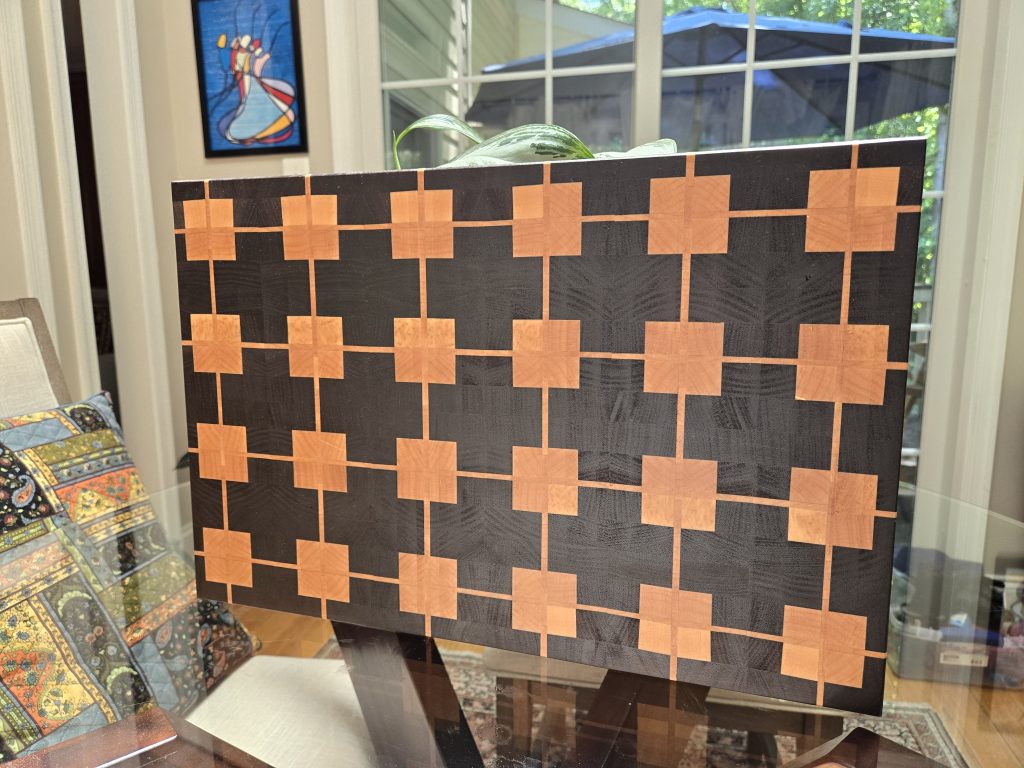
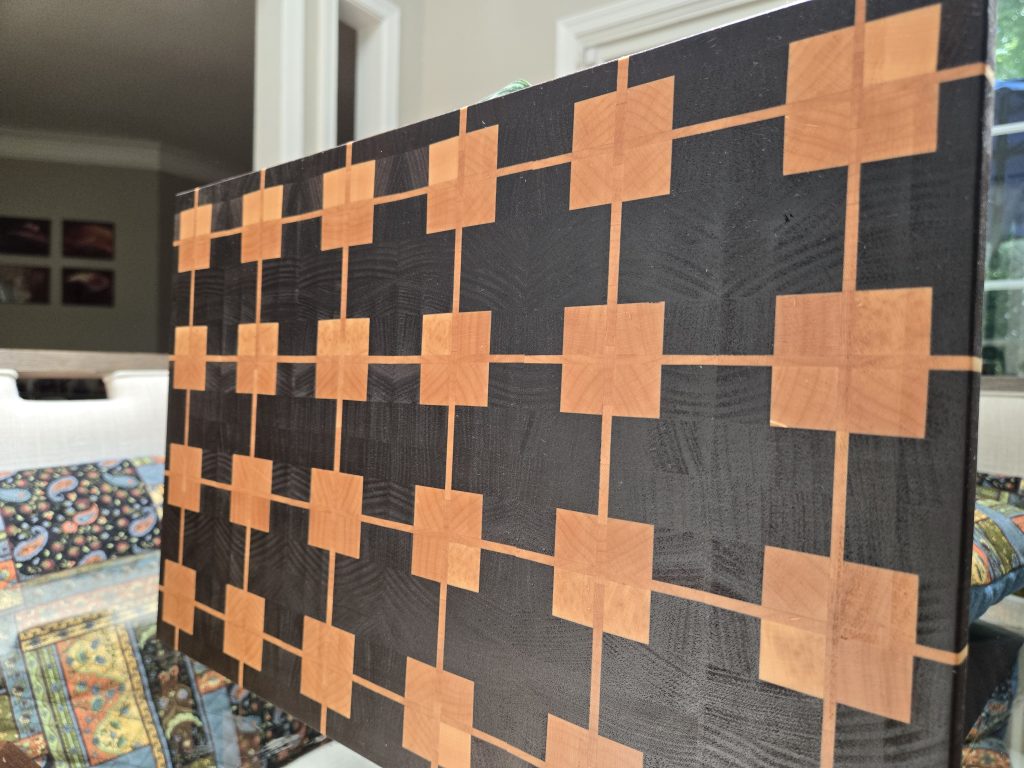
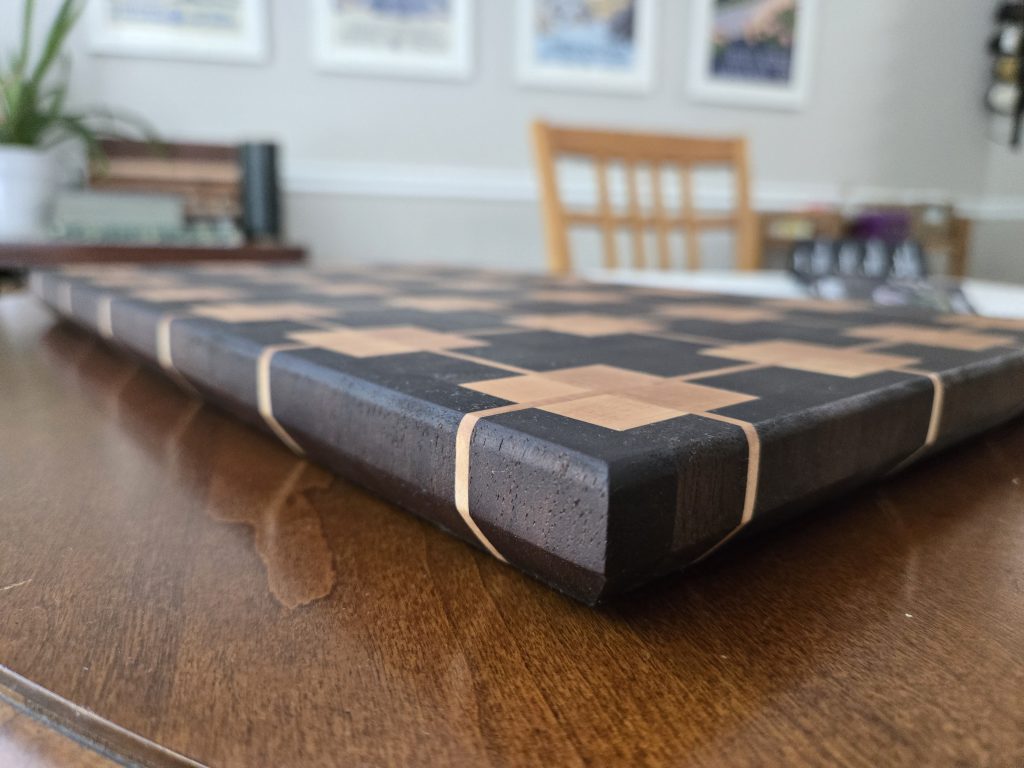
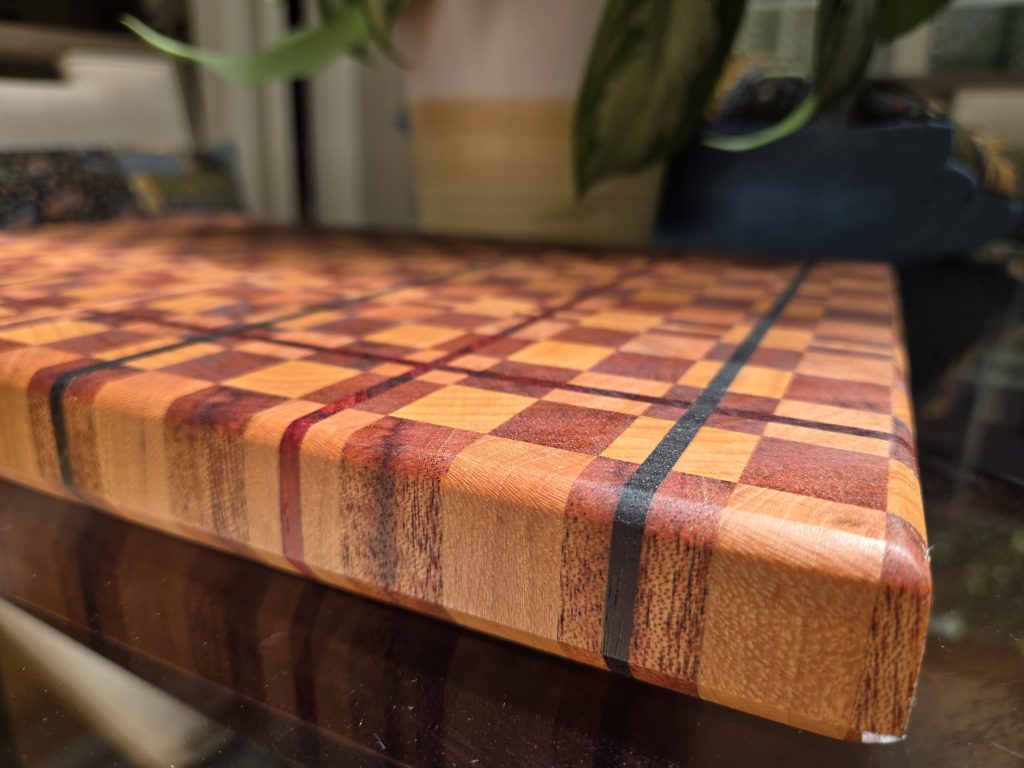
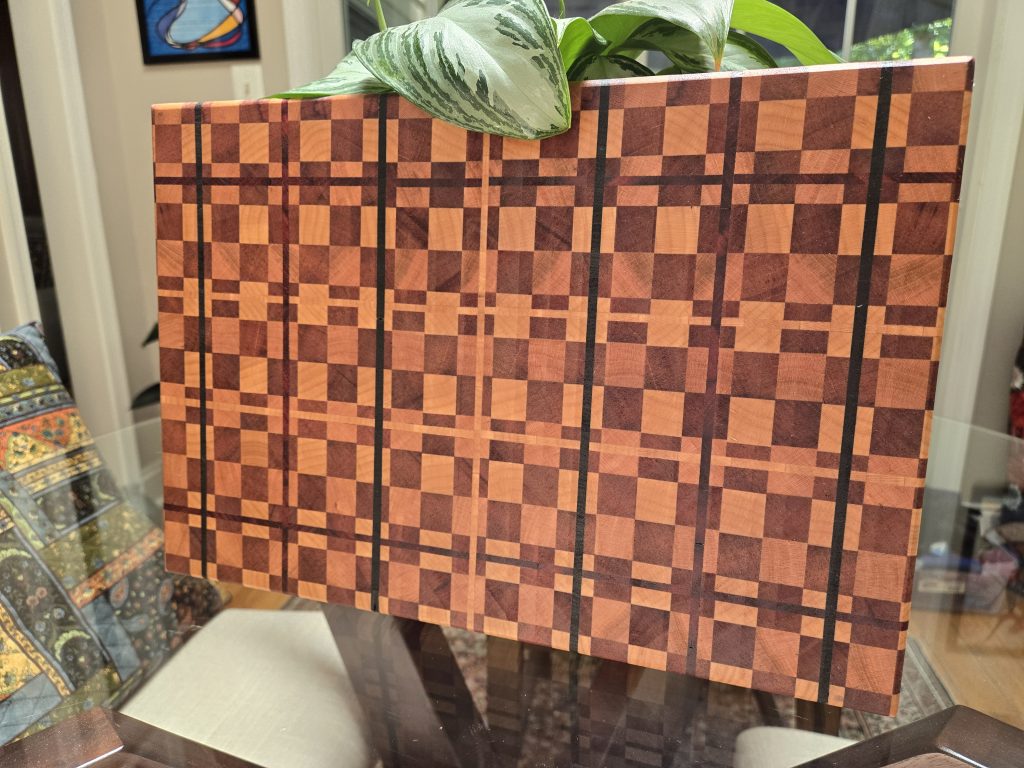
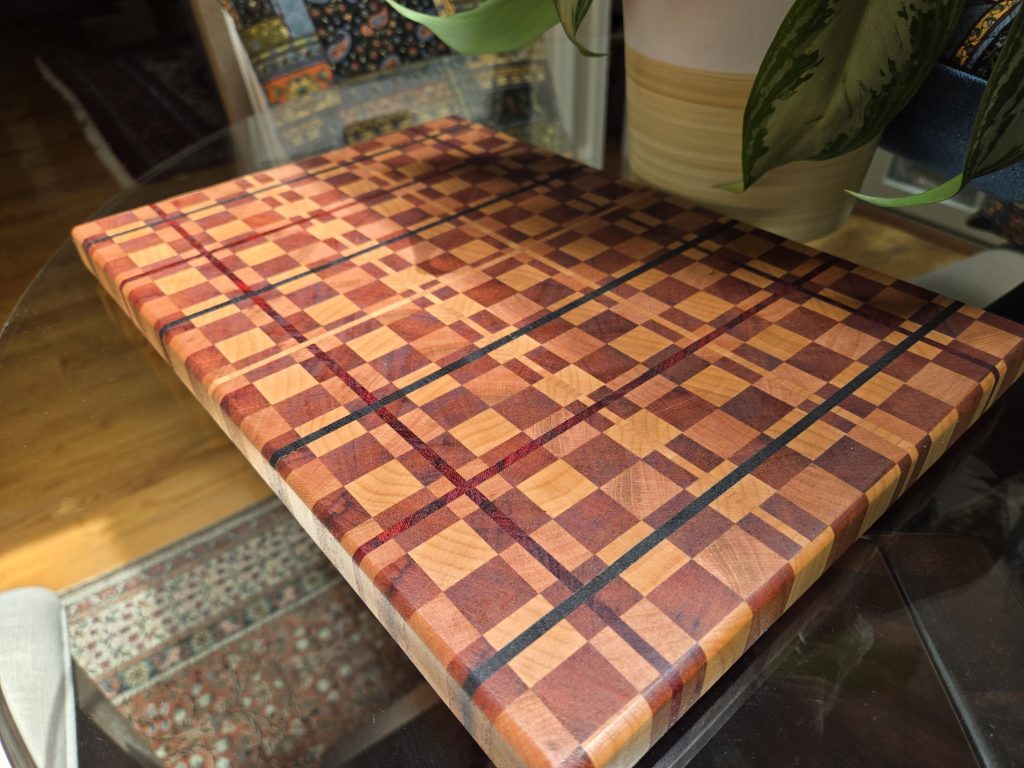
The real appeal of end-grain boards, at least measured by the popularity and prominence of youtube videos, is the creation of patterns, some of them quite elaborate and visually disorienting. So I decided to give it a try with a couple of boards, one a classic plaid pattern with cherry, sapele, and maple squares intersected by maple, walnut, and padauk strips; the other a series of white boxes on a walnut background.
I’m not sure I really enjoyed the process. So much sawing and jointing and planing, which means so much wood waste and sawdust. So much glue. Creating the strips was diabolical and the reason I ended up with so many different colors in the plaid was because I kept messing them up. And flattening an end-grain board is such a pain. I used a flattening bit on a router with a jig. Effective but time-consuming.
Which all of that said, even with slight misalignments during the glue-up and other small flaws, the results are pretty stunning. Sometimes, when I finish a piece, I take a long look at it and say to myself: I can’t believe I made this. These two boards fall in that category. They are so much more accomplished and sophisticated than my first set of boards years ago.
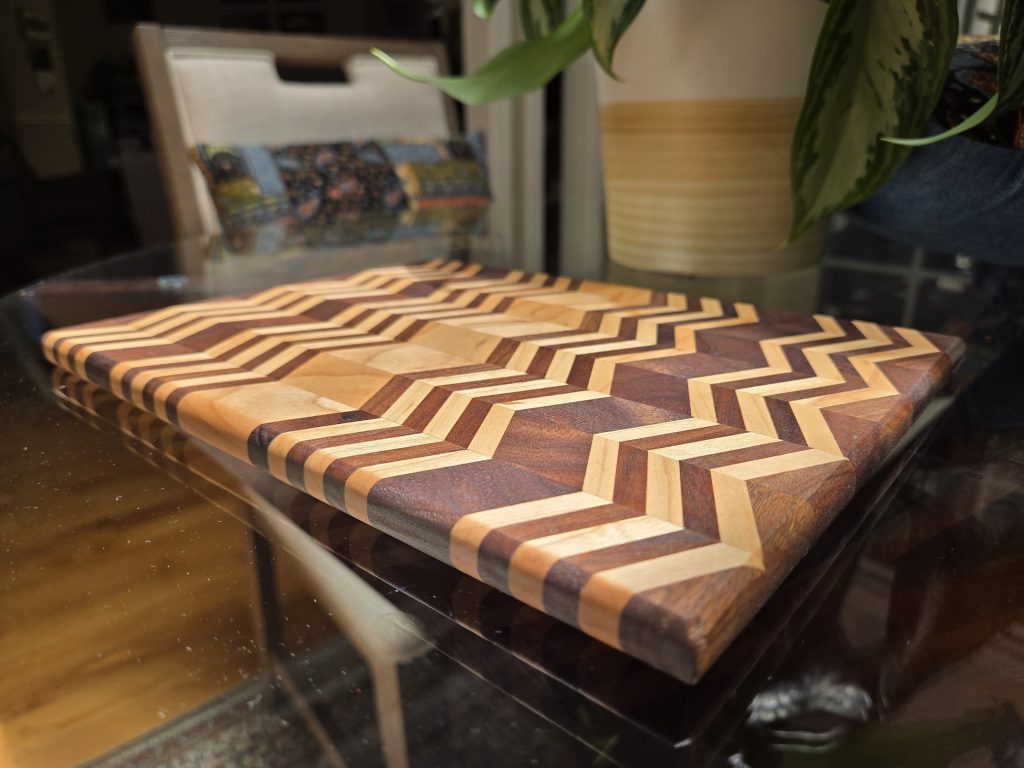
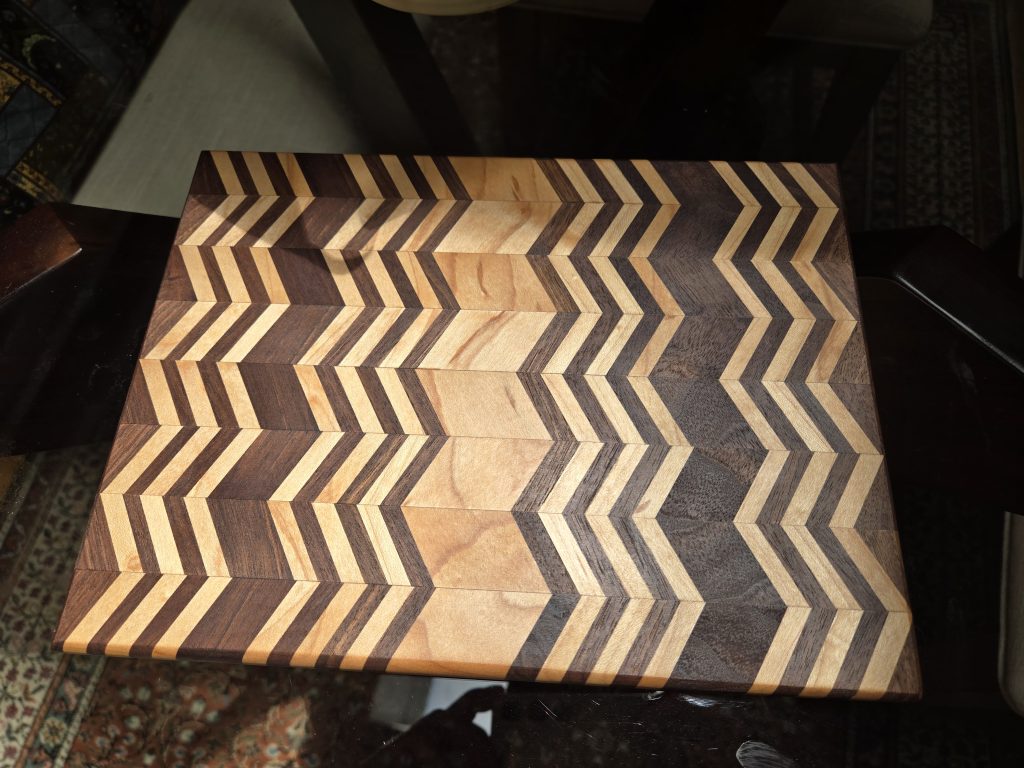
While making these, I also created a patterned face grain board after getting the idea from a video my uncle sent me. You can see the misalignment, which was always going to be the case as the strips in the original board I adapted were imprecisely sawed. The result still pops quite impressively and it’s a technique I’ll likely use again in the future.