The mountain. Surely there are few more awesome elements of our natural world, surpassed perhaps only by the seas and their boundless,unfathomable depths. The mountain is awesome in its original meaning, generating awe at its grandeur, wonder at its existence. Birthed by titanic and tectonic forces, the mountain not only rises to pierce the clouds and the skies but grows outwards to create a landscape unto itself. While the inexorable rhythms of wind and water may whittle its heights and its heart, the mountain even to this day resists human efforts to create pathways through it. Those great tunnels that carve through a mountain are feats of engineering but barely a dent in its side and the roads we create must weave and wind along its slopes as nature allows – not as we would wish to dictate. There is a reason the phrase moving mountains has its meaning: it is an impossible task.
I speak of the mountain, not the mountain range. The mountain is the one that rises above its siblings to dominate the vista, creating a view seemingly painted by nature, inspiring artists and stories and legends across all cultures under its gaze. Mount Rainier, called many names by many peoples, is such a mountain. It is an inescapable and majestic presence, visible for miles and miles, housing towns and villages on its slopes, and home to one of the great national parks of the country.
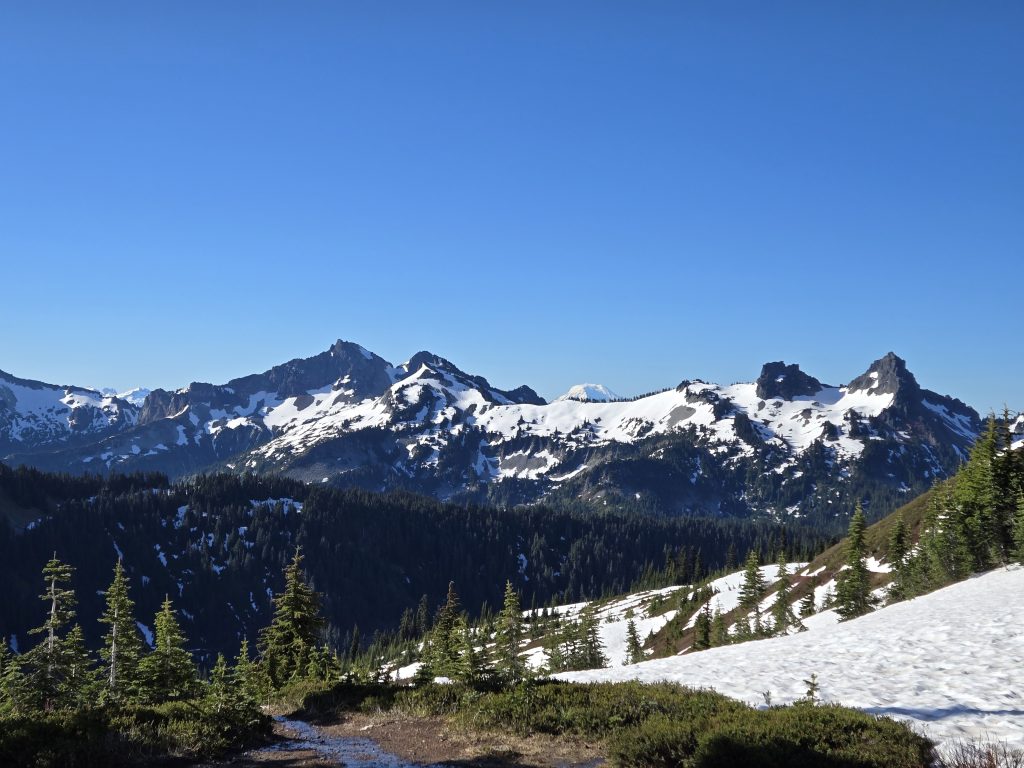
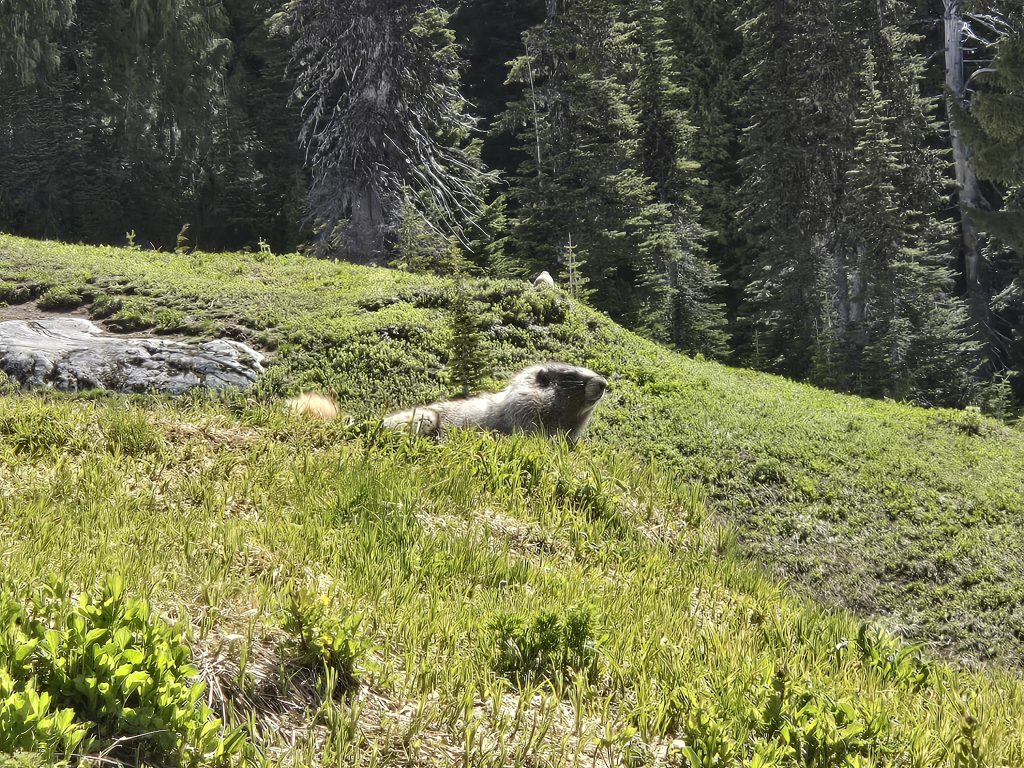
It is also home to one of the great hikes that the US has to offer: the Skyline Trail. It doesn’t have the name recognition of other classics like Angel’s Landing or Half-Dome but it is probably the most fun hike I have ever done. I have a feeling I did it at just the right time as well. I am sure the trail is beyond gorgeous in July when all the snow has melted and the wildflowers are in peak bloom. But in mid-June much of the trail was still covered in snow while in the lower reaches the alpine meadow was emerging and the marmots were about.
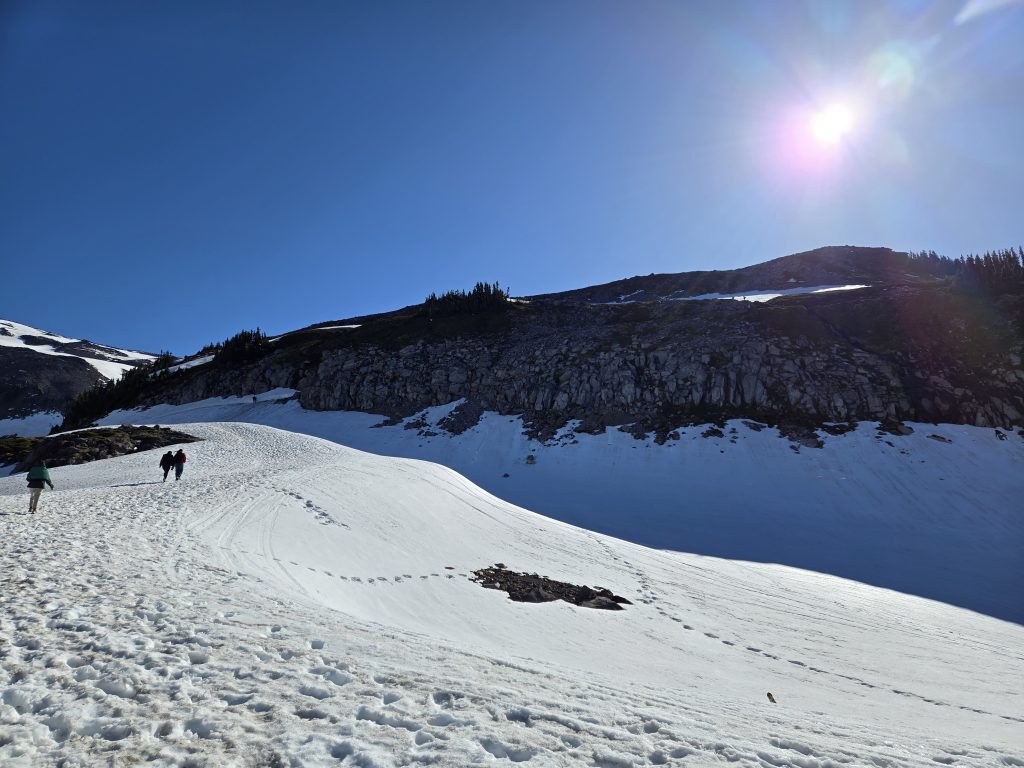
The beginning of the hike was crowded as the slow ascent included expert hikers with their microspikes and trekking poles, amateur but experienced hikers like myself hoping their boots would provide the necessary traction, most people in sneakers, some in shorts and a tshirt, others bundled for cold winds of the highest points of the hike. My favorite getups, the ones that had me scratching my head, included the man in tshirt, shorts, and sneakers, carrying a child in one of those carriers that you see babies in, but in this case the child was definitely a toddler capable of carrying on a conversation (it was in Chinese so unfortunately I was unable to effectively eavesdrop. On the way down, I saw a young woman in a tshirt and sweatpants, carrying only a single water bottle, and comfortably scaling the snow in… Crocs. Oh humanity, you never cease to amaze.
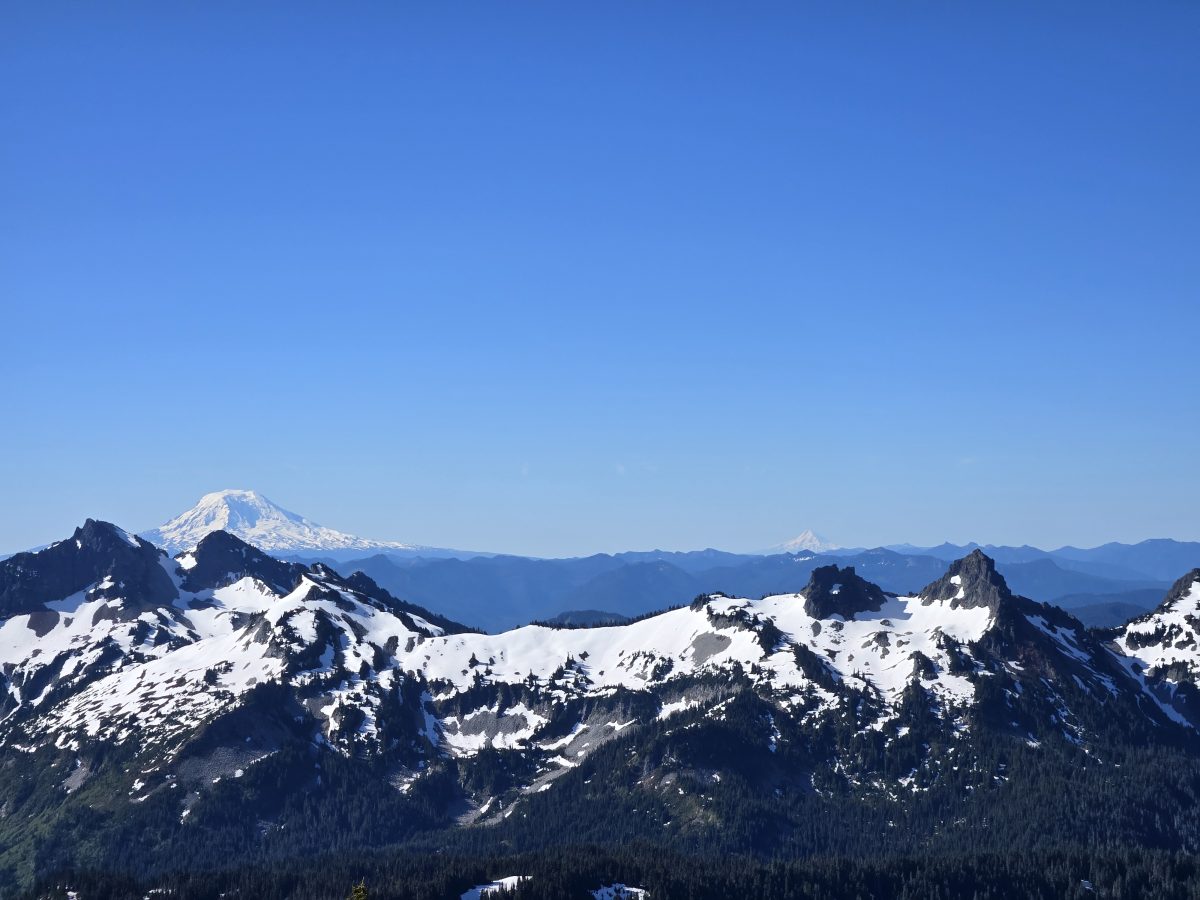
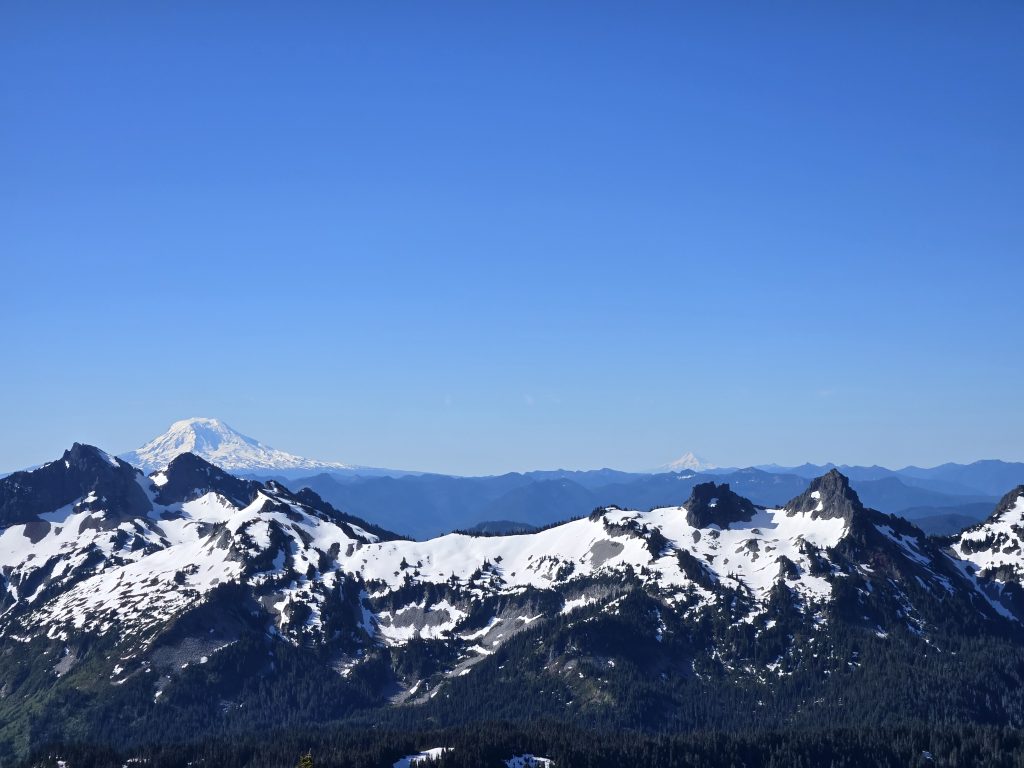
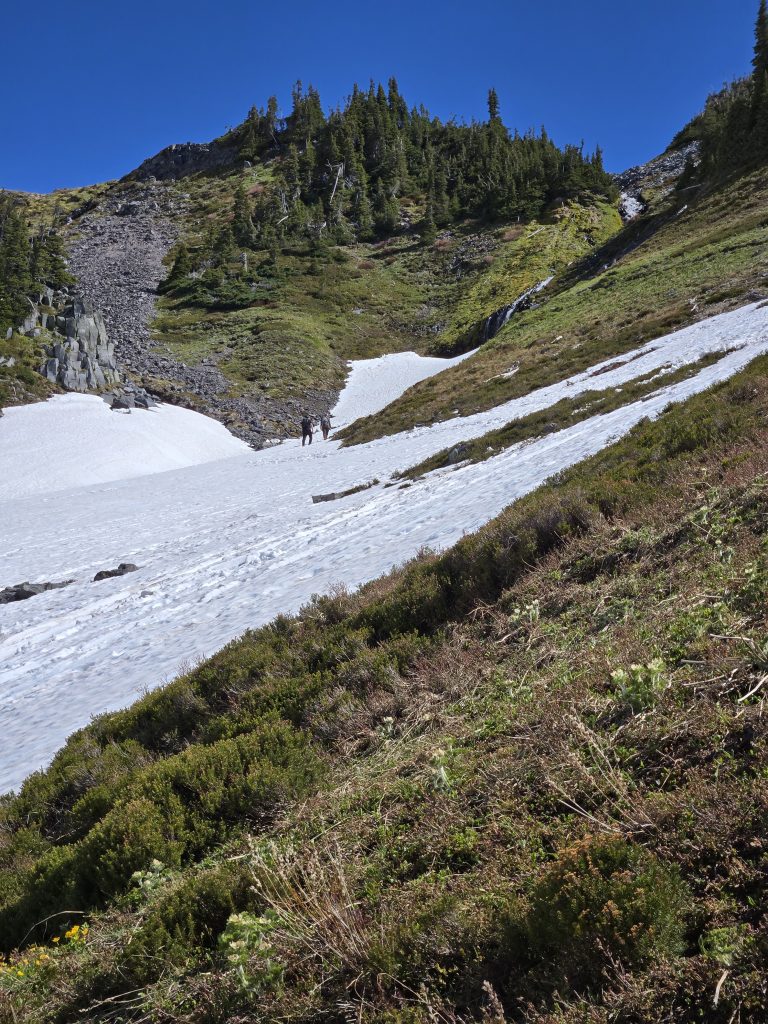
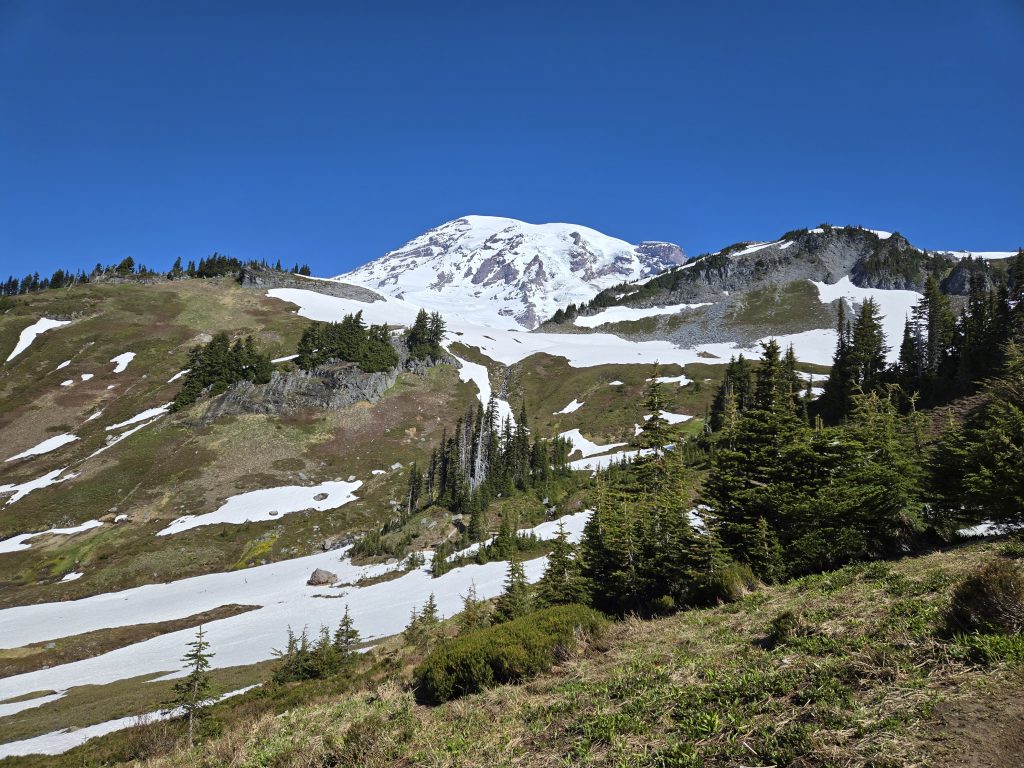
The crowds started to thin out at the first major slop covered in snow. The snow was firm and slushy, technically similar to dusty and rocky slopes, where every step up had a bit of a slip and a bit of a slide. In this case, I benefited from the previous hikers of the last couple of days as their footprints had solidified into foot holds. Every part of the trail was fun, from figuring out trickier ascents in the snow to deciding on some descents to just get on my ass and slide down. The trail’s main scenic payoff is Panorama Point, with a clear view of the Cascades, with each of Mt Adams, Mt Hood, and Mt St Helens visible to the naked eye in the distance. Nearly 7000 feet high, the peak of Mt Rainier from this point looms large, giving the false impression that you are nearly there before realizing, no, it’s actually another 7000 feet to the top.
I took a short cut on the way down, heeding the cautions of the park rangers to avoid the easternmost stretch of the loop due to hazardous conditions. There was enough snow that some people were bypassing the trail altogether by human sledding down a couple of slopes while those working their way up in the opposition direction lost the trail as some misguided footprints compounded as more people overshot a turn. It was a bit amusing when going down to have someone randomly pop out from behind a switchback or small hill of snow to ask, courteously I should add, where in tarnation is the trail?
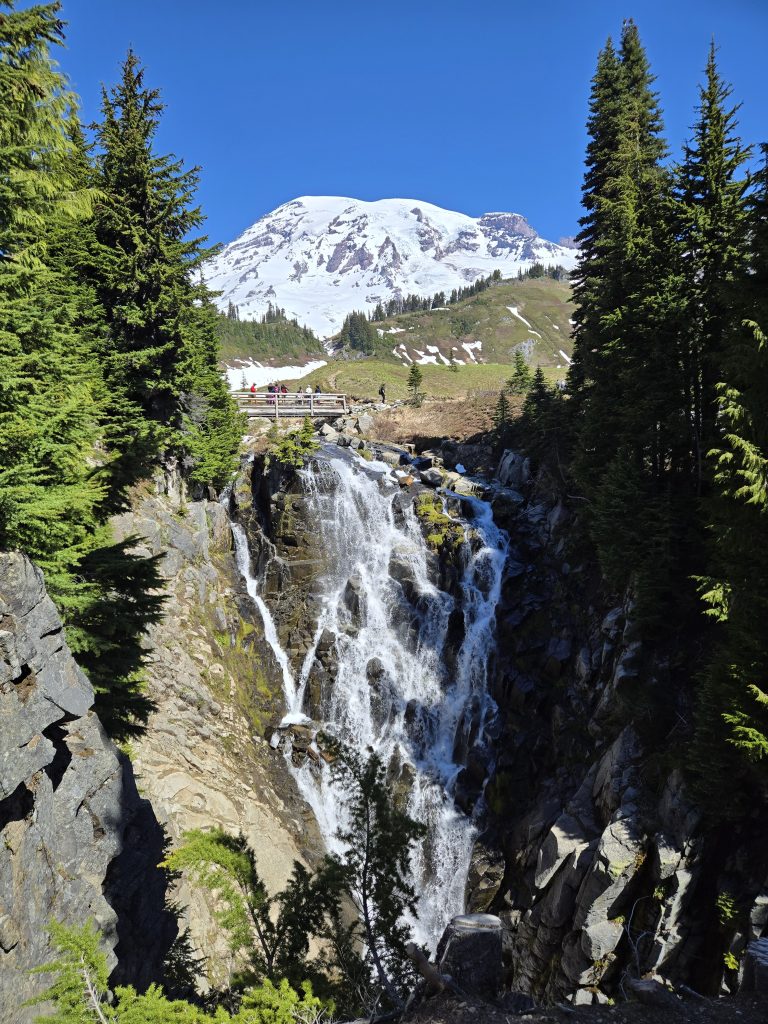
At the bottom, there is a waterfall. I took an obligatory photo for posterity before making my way to the visitor center, which unfortunately was temporarily closed as some moron had let loose some bear spray inside. Back to the lodge then, where I barely resisted the temptation for a second soft-serve ice cream in as many days. I don’t even know why they ask whether you want vanilla chocolate or twist. For soft-serve, there is only one answer: twist.
After lunch, I took an alternate route out of the park so my hopes of mountainside driving were dashed but the scenery made up for it. I’d like to say I took the curves like James Bond looking to impress a lady friend or chase a dastardly mega villain but age has mellowed me (like a fine whisky, of course) and experience has allowed me to overcome my white knuckles on the steering wheel style of the past. In any case, no road in a national park can be as terrifying as some I’ve crossed in Turkey, with two-and-fro traffic in a ledge barely enough for two cars, let alone the lorries that typically thunder on those mountain roads.
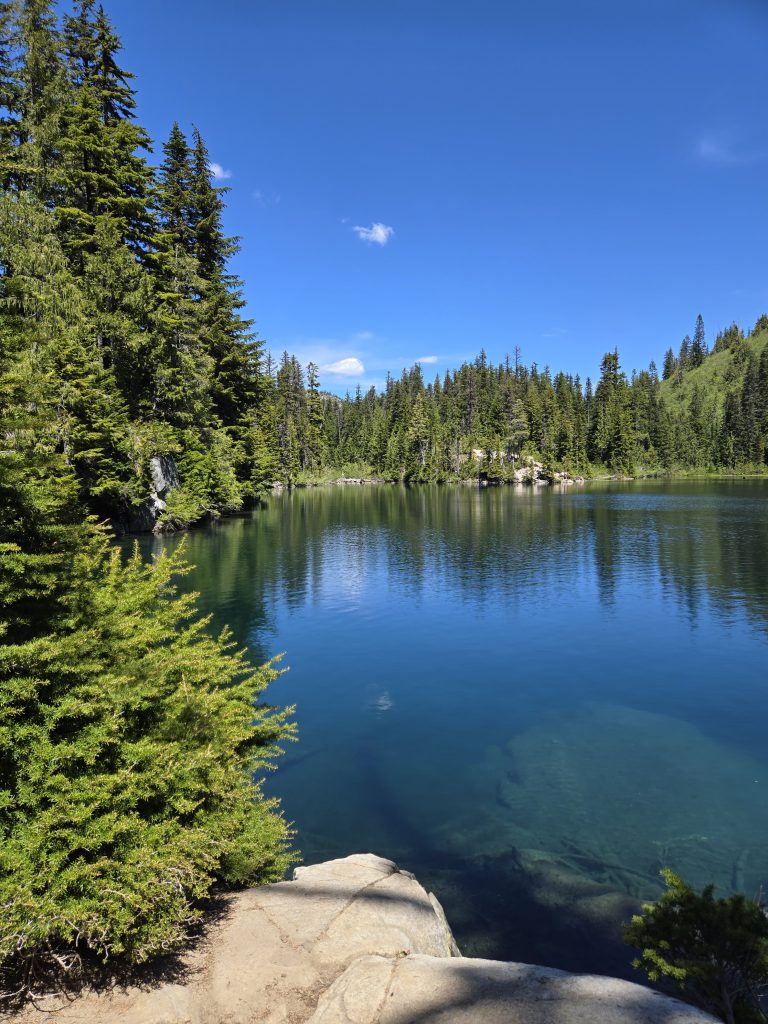
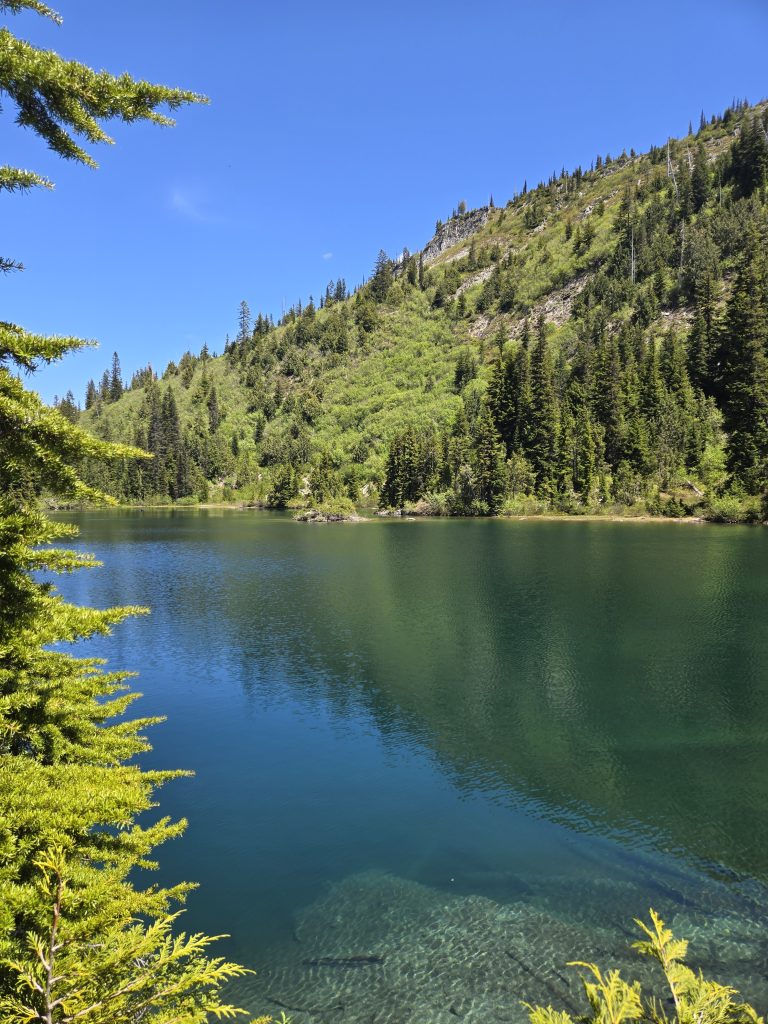
I did one more hike on my way out after espying a parking spot, an unexpected fortune on a weekend afternoon. The Snow Lake trail seemed like a good digestif after the epic Skyline experience of the morning but ended up being fairly challenging as it kept going up and up and up for a mile and change in the beating afternoon sun, unrelenting evening the pleasant mountain spring weather that was slowly turning oppressively hot. Snow Lake itself was quite beautiful, exactly what you want of an alpine lake, serene and crystal clear.
Soon after I bid adieu to a beautiful day at a great national park and resumed my journey, heading south toward Mt St Helens, the jealous mountain.