Categories
life

All Creatures Great and Small

Earlier this week I saved a bluebird nestling. I came home one day to see a small ball-shaped something on my driveway. On closer inspection, I saw that it was breathing and lightly feathered but had completely collapsed within itself, its beak and talons hidden. I couldn’t find its nest on initial inspection and I let it be in case its home or its parents were nearby. A couple of hours later on my way out for a yoga class, it was still there, now a bit more unfurled. With a slight drizzle coming and uncertain how to proceed, I built a makeshift shelter for it with branches and cardboard.

When I returned the rain had increased and the shelter had not prevented the bird from getting soaked. While previously I had looked upon the chick with some concern and curiosity, it was at this point that my empathy crossed the phylogenetic divide. This poor thing, wet to its core, was shivering and breathing heavily. It would take a hard heart indeed to let the situation be and if my heart is anything, it is certainly not hard.

This experience led me to do some research on our level of empathy towards different animals, which is where I stumbled across the theory of phylogenetic empathy. This is a fairly intuitive idea – that we are more likely to form emotional attachments with nonhuman animals that are closer to us phylogenetically (evolutionarily). It seems to be a theory that is very difficult to explain empirically as to the why but fairly straightforward to support through measures from studies conducted across cultures. We struggle to connect with insects and spiders, organisms that are almost entirely foreign to us structurally and socially. Hence, their common usage as enemies or evil entities in fantastic literature, from the Bugs of Starship Troopers to Ungoliant and Shelob in Middle-Earth (or Orson Scott Card’s Enders Game, which takes a much more thoughtful approach).

Birds fall somewhere in the middle of the empathy hierarchy, evoking more connection than reptiles and fish and insects but far less than primates and other mammals. They play an important part of every culture and environment, particularly their spiritual significance as harbingers of spring, and we revel in their song and their colors. But while some people do care for birds as pets and companions, such as hunters and their hawks, it is a stretch for must of us to look upon them with anything more than curiosity if even that.

And yet who can ignore a small bundle, heaving and in obvious distress? Is there an additional connection we have to the “babies” of any species, their cuteness tugging on our heartstring even more? Would I have felt the same way if it was an adult bird? Likely not though likely I would have done my best to save an adult as well.

It doesn’t look like much in all honesty and gives little indication of what a beautiful bird it will one day become.
Is there emotion in this look? It’s easy to try to anthropomorphize but one thing that was clear is how afraid it was.

Some internet sleuthing informed my next actions. I put what I thought at the time was a fledgling into a tissue-lined box though it did struggle, no doubt with an existential fear at this monstrously large creature (me) though I tried my best to be gentle with towels and murmurs of encouragement. It also seemed injured as it had a long fall – I had finally found the nest, balanced precariously on my windowsill three stories up. I brought it inside, covered the box, made sure there was air, and put a lamp nearby for a bit of heat.

I did not know if the bird would survive the night but in the morning, the bird was dry and active, chirping vivaciously, asking for food. Still uncertain of what to do despite all of my online research, I put it back outside in the hope that its mother was still around and could feed it. In the mean-time, I gave a call to the local wildlife rescue hotline. They found a local rehabber who was willing to take the bird in and within an hour it had found a new home in the suburbs with an expert who knew what to do.

I am always astonished by people and their ability to empathize – be it with other people, other organisms, the environment around us. I looked up what it takes to be a rehabber later and realized there is a significant amount of dedication required, unsurprising given the challenges and risks inherent to caring for wildlife. Where I had gingerly handled the bird, the rehabber immediately took it in her hands, while lightly admonishing me for putting it back outside in the rain, her touch firm and confident but also a container of warmth and nurture.

She thought it was a robin when she first took the bird (she was also the one who told me it was a nestling and not a fledgling) but later called me to let me know it was actually a blue bird. And it was doing quite well! For those interested in the spiritual interpretation (which hadn’t even occurred until a friend sent one my way), encountering a blue bird has many meanings across cultures but hope, joy, and transformation are common. It is a sign of enormous change in the future, which, like the Fool in tarot, seems to be quite relevant to my current affairs.

Our relationship with the animals around us is unbalanced, certainly for those of us who live in urban and suburban areas. We love our pets of course but they are domesticated. Some, like me, delight in glimpses of deer and foxes and tortoises while others see them as destroyers of gardens or intruders on our land. We also think nothing of killing rodents, seen as pests and rightfully so as they can be vectors of disease, and even less of insects and spiders (though I typically let spiders do their thing in my home, which essentially is pest control).

Two days after encountering the blue bird, this massive turtle was just hanging out in my neighbor’s driveway. It was soon on its way though.

Compare that to the wonderful principle of ahimsa (non-violence) in Jainism that covers all life, even insects, where ascetics may go so far as wearing masks to avoid inhaling flying bugs. Or to conservation efforts that mobilize and work indefatigably to save a species. As an example, the blue bird itself was on the verge of extinction in the 1970s until a dedicated conservation effort saved it.

For good or for ill, wild animals have become foreign to most of us in the contemporary world. Sometimes what it takes to change this and forge a new connection is an orphaned nestling blue bird, new to the world, deserving of an opportunity at life.

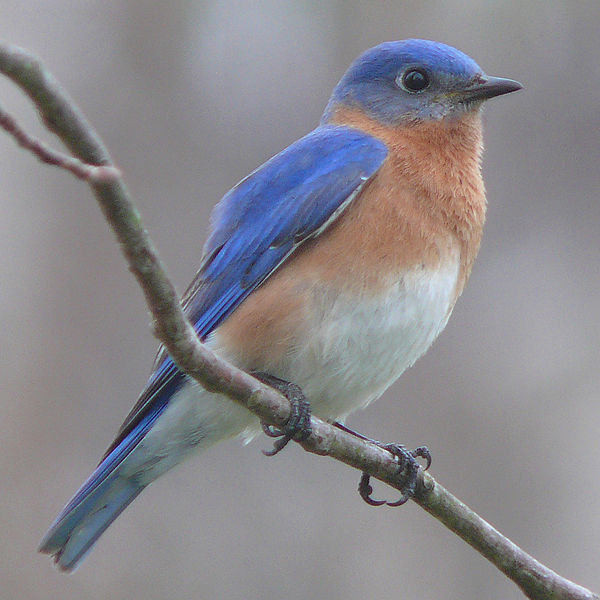
An eastern blue bird. Picture is from the blue bird conservation article.

Categories
life

The Sailing Experience

I recently decided to browse through an old blog of mine, last updated in 2011 and no longer visible to the internet at large, to get a sense of myself in days of yore. There are a few posts that are worth saving and sharing for posterity – this being one of them. Almost 20 years later and I remember this experience vividly.

I haven’t edited the content at all. This is me in youth, warts and all. First published in November of 2009.

—-

By the way, I went sailing for the first time recently. And because I’m hardcore I went sailing when it was raining and cold. That’s because I’m a man and real men have a bit of hardcore sea dog in them. But enough horn-tooting and let me tell you what it’s like to go sailing if you’ve never been before. I do hear that it’s better in fair weather but even with the elements conspiring against us it was a marvelous blend of the miserable and exhilirating.

Dressed halfway with the boat in the background

I got a random call from my seasoned sailor buddy Rog Mahal asking me if I wanted to fill an open spot on a boat, knowing full well I’d never sailed. This came with the caveat that I make a weight limit. I was immediately suspicious because other activities that involve weight limits – like boxing and wrestling – come packaged with broken faces or nasty diseases. In any case, the weight limit didn’t matter nor did the drive to Annapolis at 8 in the morning – on daylight savings day no less, the best day for sleeping in the entire year. On my way over, I kept giving dirty looks to the heavens with their dark clouds showing no sign of letting up the downpour. But I gallantly strode on cause, you know, I’m hardcore like that.

Lesson Number One of sailing is to stay as dry as possible. Which means don’t wear jeans and a t-shirt. Thankfully, I was provided some slick gear but had to make do with my old Adidas, leading to an uncomfortable lack of feeling in my right foot halfway through the first race. Borrowing some fancy waterproof socks fixed the numbness and made me confident I would be keeping all of my toes at the end of the day. My Big Bad Wolf (the rollercoaster) hat (with ear flaps) was looked upon with disdain so I had to use alternative headgear. Gloves would have been useful but my hands got used to the cold eventually. PS – chap stick comes in handy.

That’s me to the right by the mast holding the boom in position

The races themselves were exciting because half the time I didn’t know what was going on. Sitting on the side of the boat, I look out at a sea of other boats and had no idea how we were doing until the very end. That makes things more interesting. The near-crashes, the mid-race course changes and angry skippers get the old hemoglobin flowing as well. Maybe if I were a little more experienced it would have been even more fun but there was a definite element of enjoyment in two basic principles I followed: don’t fall off and don’t mess up.

Waiting for the magic words – “Heartily!”

Another great aspect is the camaraderie. It’s just great having the skipper curse your name and desecrate your gods during the race and then be all chummy when all is said and done. And, hey, he got me a t-shirt so I must have done something right. After all, the day I raced we finished 13th and 9th – which, by the way, was the best the boat did all weekend. I’m not sure if I did anything positive that was statistically significant or if I have the God-given gift of providing ballast, which, by the way, was my main job. One of three, as follows:

1. Provide ballast

Basically, the boat is tipped over to one side so precariously that everyone has to be on the other side to prevent the boat from falling over. When the skipper decides to tack – which just means turn right or left – he says some jargon to prepare you and then something like “Heartily.” Upon that Pavlovian keyword, the idea is to duck so as to avoid the big-ass boom pole swinging toward you, scramble to the other side and sit your ass back down. Doing that about 30 times in a couple of hours and you’re covered in bruises the next day. When you’re going with the wind it’s called jiving (I think it’s with a ‘v’ but might be ‘jibing’) and you have to loosen some random rope.

The blue sail is the spinnaker – soon it and I become one

2. Push the boom pole

This part sucks. When you go with the wind, the spinnaker sail comes up and then the unlucky Number Five (which is what I call my position – I can’t remember the real name but it was dumb) has to make sure the boom pole stays forward. This means keeping your arms up for a long time cause you still have to be sitting. Boring and tiring.

3. The Human Pole

Great name and definitely an exhilarating experience. When it’s time for the spinnaker to come down, the bowman detaches the metal pole that connects it to the mast. But while that’s happening someone has to act as the pole for the spinnaker. That someone is Number Five. Being the Human Pole entails grabbing on to something on the boat, leaning most of your body off the boat and holding the end of the spinnaker so that 1) it doesn’t fly away and 2) still catches wind optimally. It’s really a lot of fun balancing the concepts of staying on the boat and keeping your shoulder from separating. You keep doing that for a few minutes until someone yells more jargon at which point you throw yourself back on to the deck and start pulling the sail back. At least that’s what I did.

You might be shocked at how I think any of this is enjoyable especially when considering that the weather was pretty much mixed rain all day long. But it was enjoyable. It’s taxing on the body, it’s precarious and it was effing cold but there’s a constant adrenaline rush and flurries of pure undistilled excitement. Despite the fact that at least 10% of the sailors out there were female, it made me feel like a man. If I were married, I would have gone home, ordered the wife to make me some meat and potatoes and bacon, cracked open a six-pack and watched football the rest of the day. Right after I stopped shivering.

Rocking the adidas and providing ballast