Don’t go chasing waterfalls, as they say. It as good a piece of advice as any when exploring the natural world. Scaling mountains, sailing the seas, hiking through forests – these are travails worthy of effort. Waterfalls on the other hand are interesting accoutrements, a pleasant terminus or diversion to an adventure. When they are the sole purpose, the entirety of the destination, I find myself sorely disappointed. I haven’t been to the great falls of the earth, the Niagaras or the Victorias and their ilk, but I suspect I would feel the same of them. The waterfall to me is like a good painting in a museum: pleasing to the eye worthy of a few moments of deliberation and exploration before moving on to the next piece.
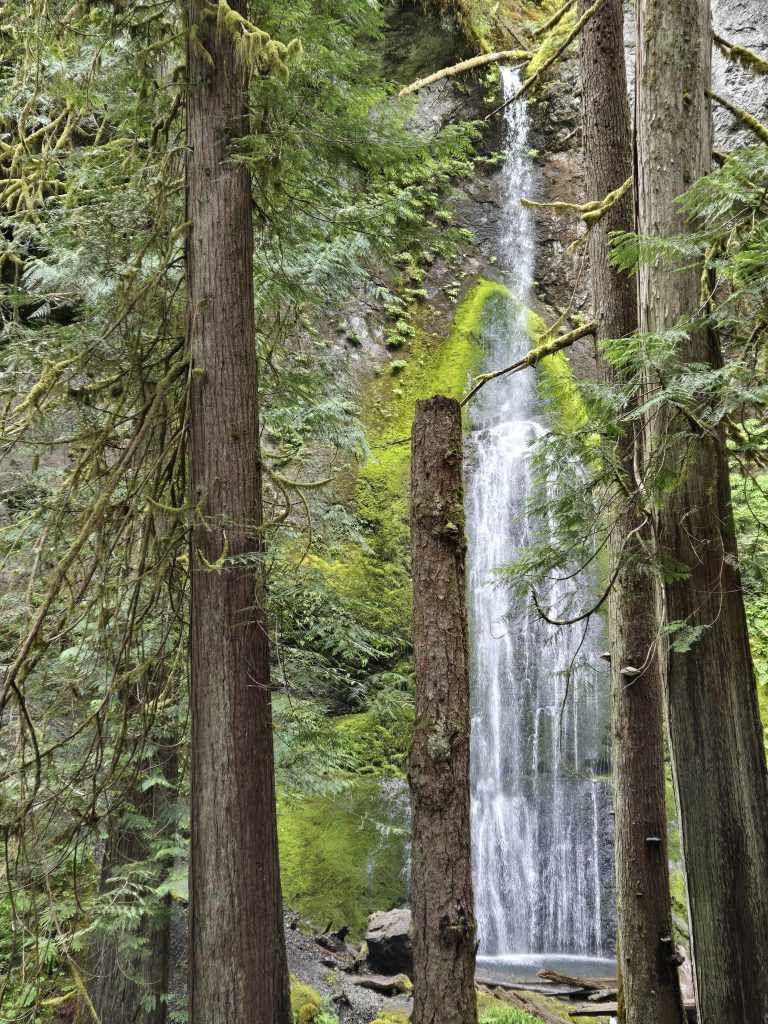
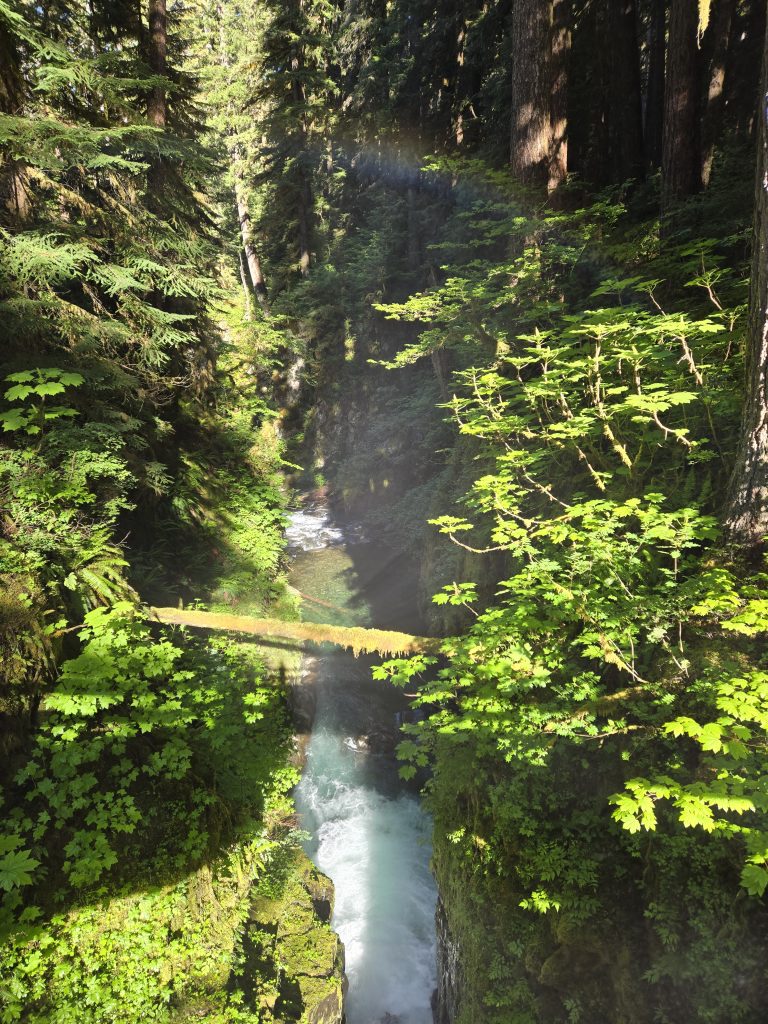
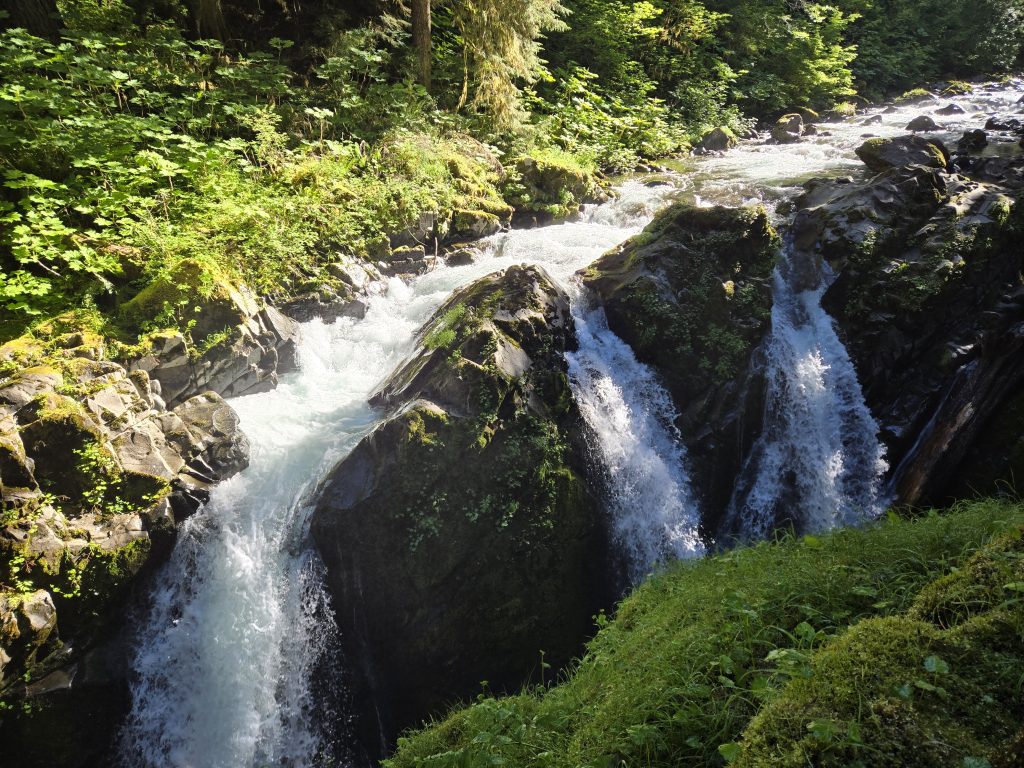
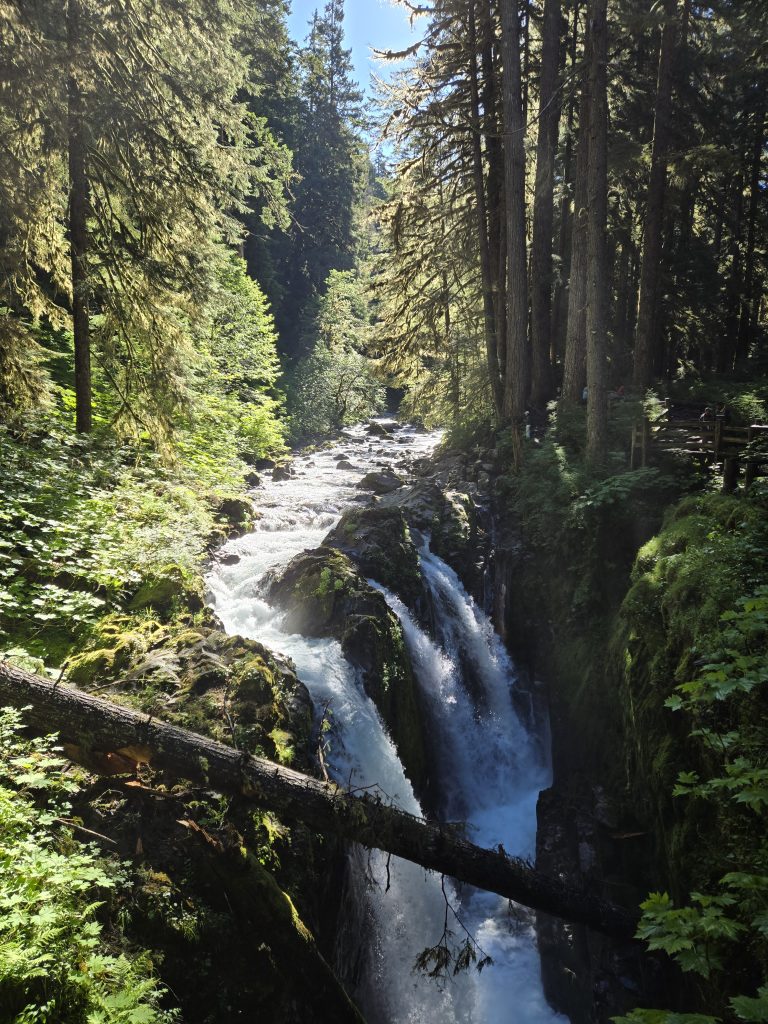
And so it was with lowered expectations that on my second day on the Olympic peninsula I ventured out to Sol Duc falls first thing in the morning. Again my east coast biological clock served me well as it was a location best experienced with as few people around as possible. While my views on waterfalls did not change because of Sol Duc, I did find myself in an utterly magical place, one where it is easy to imagine water and forest spirits gathering in halcyon days of yore.
A short hike through a lovely stretch of rainforest led to a three-pronged waterfall that complemented the lush green of the forest around it perfectly, the minute droplets of its spray forming the slightest of rainbows with the dappled sunlight of the early morning, close enough to touch. I have no doubt that the experience would have been much different had there been hordes that were snaking their way there as I returned to the car park. With only a few other souls around it was a moving experience.


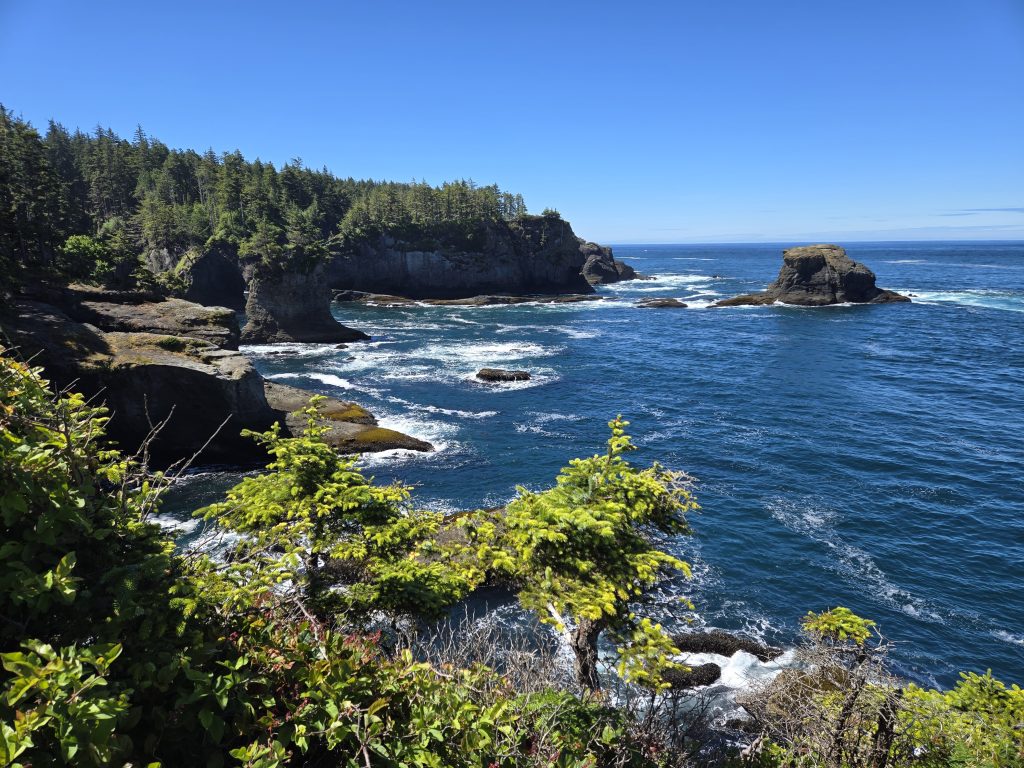
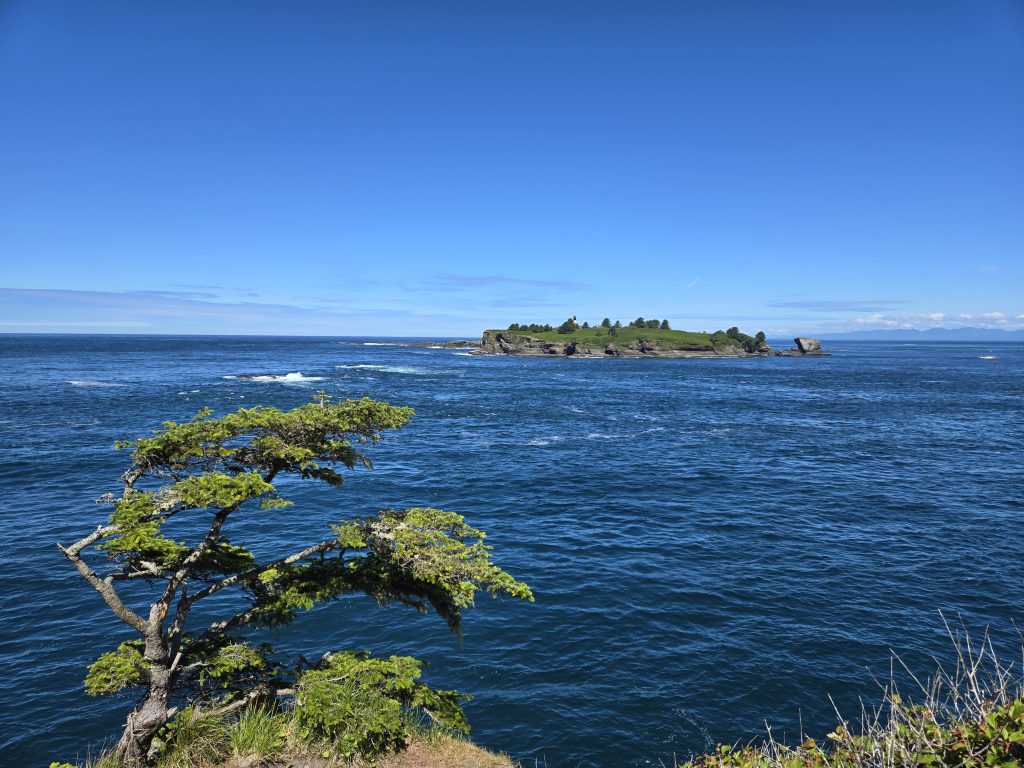
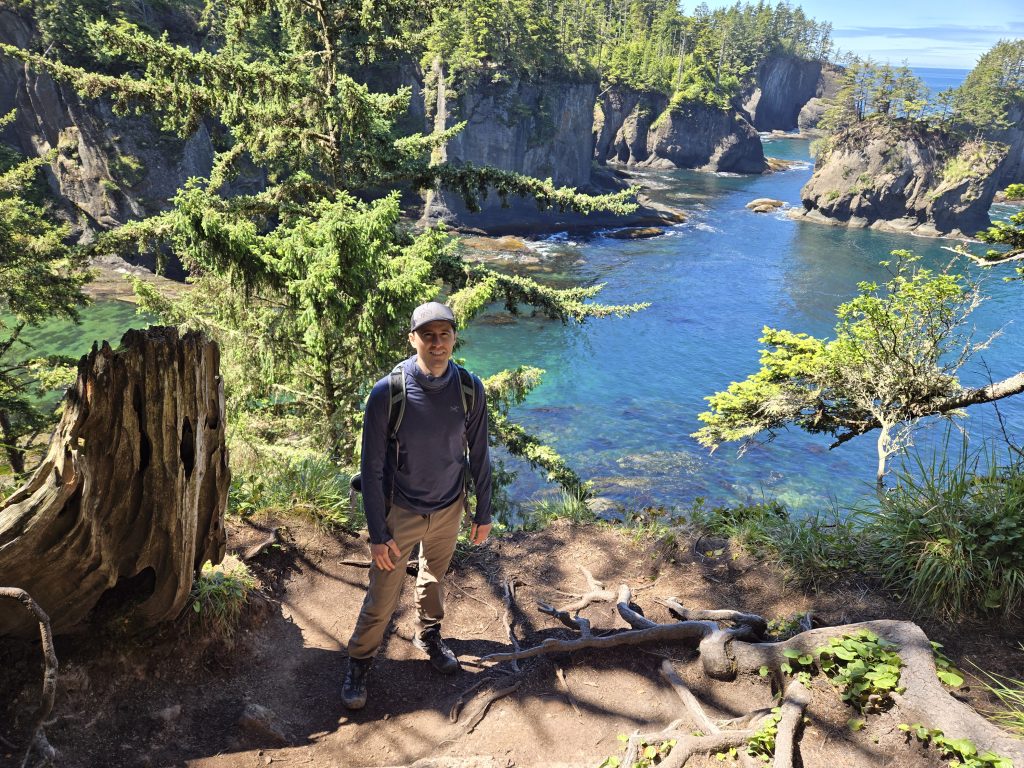
My next stop was not on my original plan but I decided that the clock could not stop me (in this case, the clock was not some artificial schedule I created for myself but instead the timing of the low tides for my final visit of the day – which I will of course shortly come to). I entered Makah Indian land to visit the most northwestern point of the contiguous United States: Cape Flattery. Overlooking the entrance of the Pacific Ocean into the Strait of Juan de Fuca, Cape Flattery is a place of rugged beauty, its waters a deep blue as they crash into the cliffs of the peninsula. I visited on a beautiful, clear day, where Canada across the way was clearly visible, where bald eagles preened with majestic pride, where cormorants skimmed and dove the seas. It was not a particularly unique place in its scenery but there was an energy and a feeling around it, built no doubt by the dark forest of gnarled, ancient trees. It was a place the felt like that on most days it would be foggy and stormy, unforgiving even, so that visiting on a day with a fully shining sun lifted spirits of all around.
I would be remiss not to mention the truly excellent meal that I had in the Makah reservation: halibut and chips, served from a food truck sitting in someone’s front yard and eaten in my car in the lot of the Makah cultural center with relish and delight. It was delicious and, well-sated, I made my way to the final destination of the day: Rialto Beach, one of Olympic National Park’s famous coastal strips.

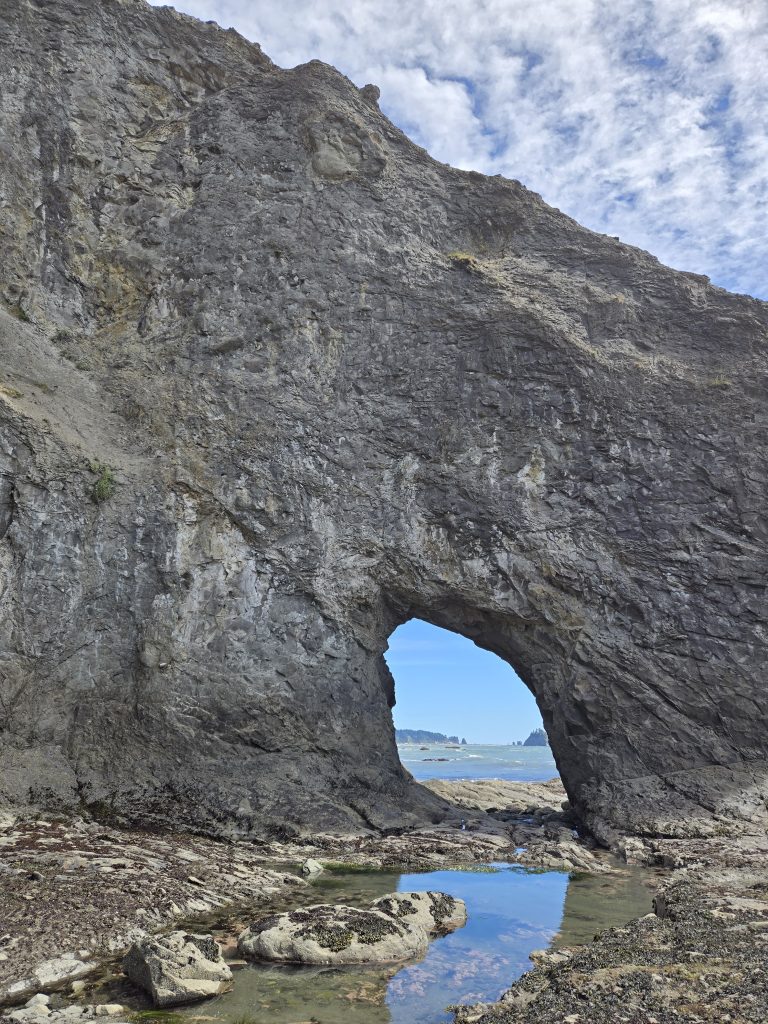
I timed my visit to coincide with low tide to increase my chances of exploring tidal pools. Unfortunately so too did seemingly every other person in the area and I don’t blame them given the beautiful afternoon at hand. Leaving my car more than a mile away from the beach, I trudged along the road, a bit grumpy and fatigued but resolute. The beach itself is another one that is likely more photogenic on foggier days with its odd rock formations, the pebbly sand, and the large pieces of driftwood, all framed by a verdant forest. The beach of course stretches miles on end in either direction but Rialto beach is known for its proximity to the uncreatively labeled Hole in the Wall rock formation, which is, as its name advertises, a big hole in a big wall of rock. The walk there was fine, more of a dance between sinking in the pebbly sand and avoiding the incoming waves. The real fun was in tidal pools surrounding and within the hole as it was here that I gazed on bright green sea anemones, the tiniest of hermit crabs, and deep orange starfish.
Even on the sunniest of days the Pacific Northwest’s beaches do not forget their true nature, their ruggedness, and so this beautiful day was adorned with wonderful, strong sea breezes that did the location proud as I made my return trek. A chance decision to explore another odd rock formation brought me great fortune. I thought that orange starfish was the only one I would see – and then here was a veritable menagerie of oranges and purples, clinging on to the rocks, waiting for the high tide to return so that they could end their exposure to elements and predators.
Walking an extra mile after trudging across a pebble beach and traipsing across ragged shoals certainly does not do wonders for one’s soul. As I kept wondering if my car would be around just the next bend, I was unpleasantly reminded of a trip to the Algarve in Portugal many years ago. I had taken a bus out to a lovely peninsula for a hike that ended with a beautiful sunset behind a lighthouse. So far so good except I had another five kilometers to walk, in the gloaming and soon the dark, hoping to catch the return bus and also hoping my feet would not be destroyed, wondering if I should ask for a hitch (I did not). In any case, this walk was not nearly so dramatic as my footwear was much better and my car not so far.



The night was spent in Forks, the self-proclaimed logging capital of the world. A small slip of a town is Forks, its locals going about their lives as tourists like me, from far-flung lands, mingle for a night or two, nothing but wisps of existence, there one day, gone the next.