Here’s a bit of trivia: my great great grandfather, Mehmet Deralla, was the first Minister of War of the first Government of Albania, created toward the end of 1912. It’s a bit of trivia that’s useful for truly trivial moments, like silly icebreakers in corporate gatherings, but also one that holds a prominent role in my family history. Like millions of people around the world – and as attested by the continued popularity of platforms like Ancestry.com and DNA tests – I am quite interested in my genealogy and family tree. And like many families in Europe and the Near East, my predecessors were affected by the revolutionary zeal and political realignment of the post World War I era, leading to fascinating stories of survival, migration, and thriving.
Originally from Tetovo (which is in the modern state of North Macedonia), Mehmet Pasha’s children and descendants for various reasons dispersed, many moving to what is now Albania and at least one branch, through my mother’s grandmother, ending up in Turkey. Therefore, despite the remove of several generations, Albania has always been a place of interest for me, always on the periphery of my identity. So on my recent trip to Turkey, as I was considering excursions, the obvious in retrospect decision was a trip to Albania. In four wonderful days, I spent time with family I had never met before, explored (unfortunately too briefly) different parts of the beautiful country, and pondered that most enjoyable of self-reflective questions: who am I?
National, ethnic, and cultural identities are key parts of the modern persona. National identity is still relatively recent in the history of human civilization but is increasingly becoming the most important as local cultures amalgamate into monocultures (or as the uni-context dominates our lives). Most of us, when asked “what are you,” would list our nationality near the top of our identities. I am an American, born and raised, both critical of its history and a believer in the ideals the nation was founded on. I also identify as Turkish from a cultural perspective – though the lines blur as I root for the Turkish national football team – as I speak the language, embrace many of the traditions, and have a somewhat spiritual, for lack of a better word, connection to the land. It is a privilege to be so steeped in two different cultures as it gives me a very different perspective on life, the universe, everything. It also drives the identity that supersedes both: I am a human being, a citizen of the world. But that’s a digression for another day. Returning to the point at hand, I now wonder: am I also Albanian? How far back does the connection have to go or is the nature of the connection more important? Does it even matter?
Before heading to Albania, my aunt connected me to Merita Teyze (teyze in turkish has the dual meaning of your mother’s sister and a general “auntie”), who in their youth was pen pals with my mother. All three are great-grandchildren of Mehmet Derrala and so we all share a common ancestor. It’s difficult for me to articulate the warmth, the almost disorienting hospitality, the connection I experienced in Albania. The family contingent when I visited was small as the diaspora has expanded throughout Europe and America, while others were on their summer vacations. But the connective tissue of family, despite its geographical dispersion, was obvious and evident. And I was just part of the family. Not a matter of being accepted or anything like that, more so just a matter of that’s just the way it is.
– – –
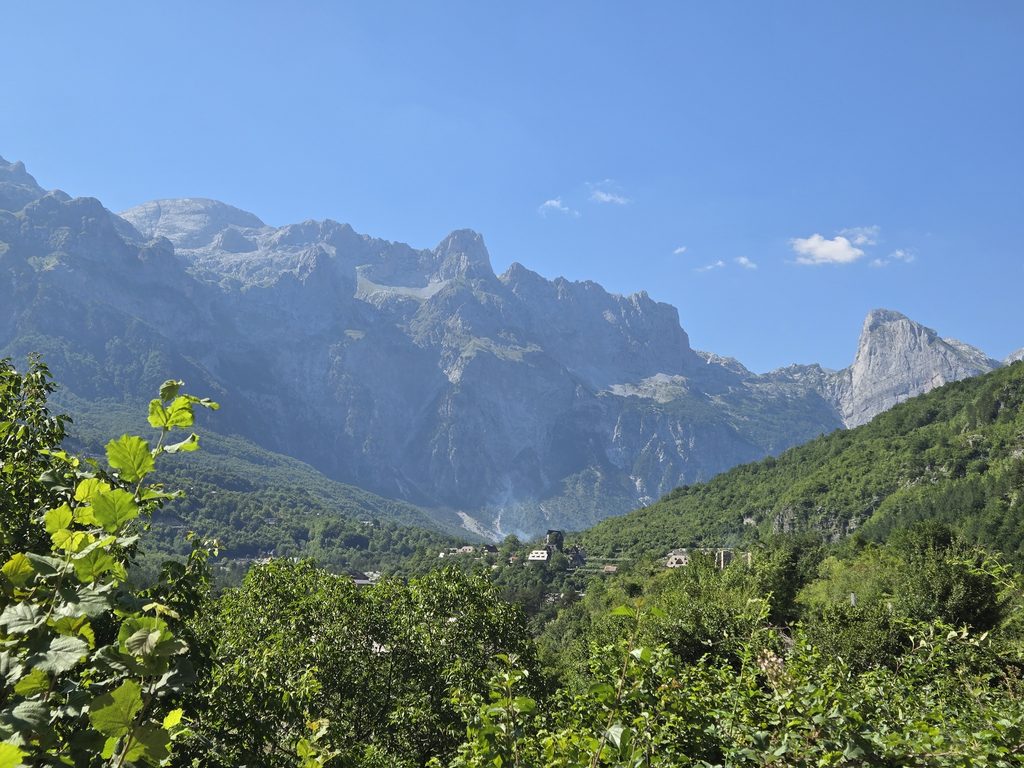
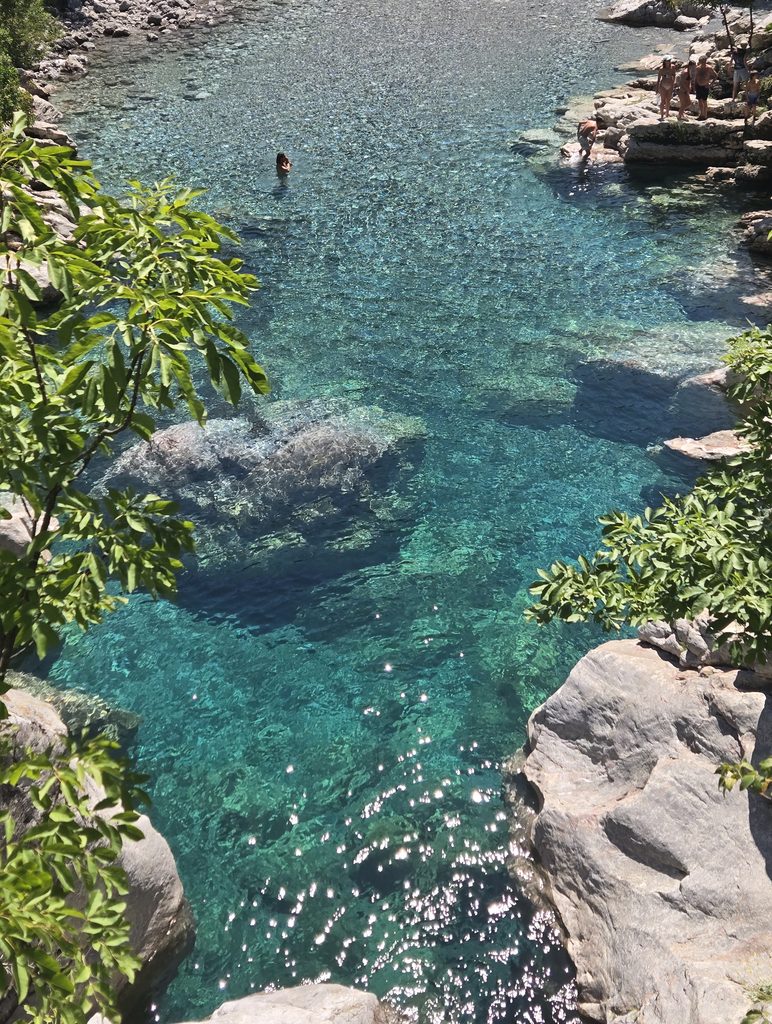
Albania is a beautiful country and I spent some time exploring. My first trip, an epic 14-hour day, took me to the northern mountains – called the Albanian Alps in a bit of a marketing ploy – to experience wildly winding roads with steep drop-offs, majestic peaks, and incredibly blue natural springs. Here I learned more about the culture of Kanun in northern Albania , a part of the world that is not completely remote or cut off from the modern world but, despite growing tourism, mostly of pale British youth in their quest to turn lobster red in the beating sun, is hard enough to reach that it feels novel and virgin. The country’s geography is generally mountainous, and generally unexplored and unknown to the outside world, which lends an additional layer of discovery and awe to gawking tourists like myself.
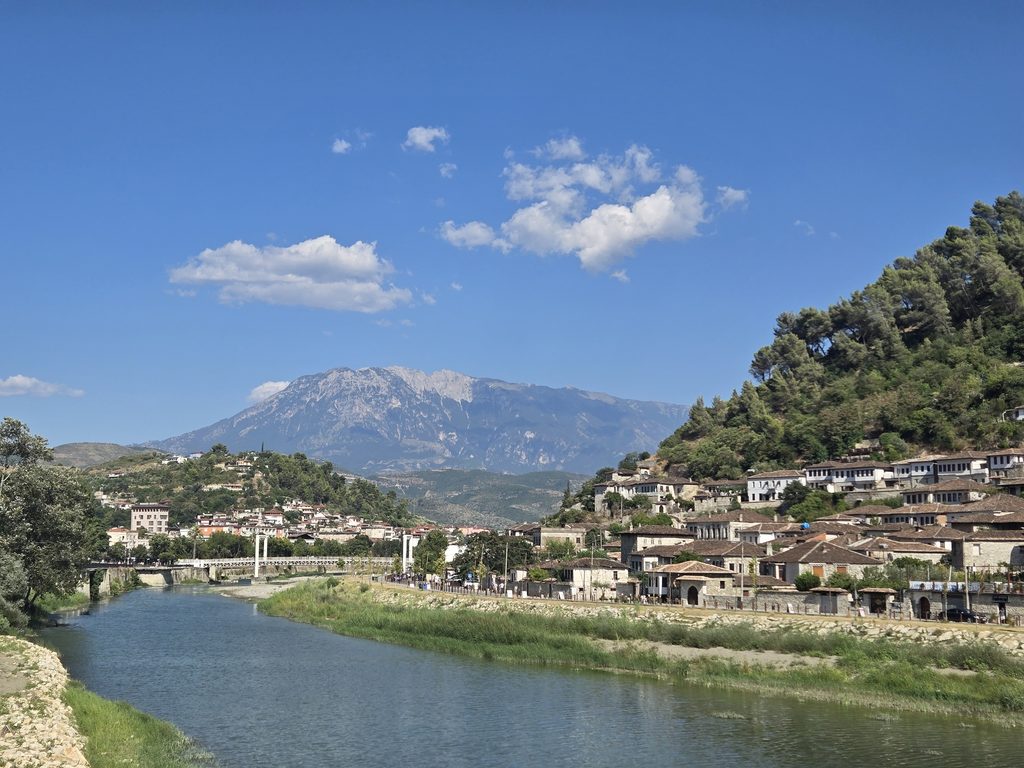
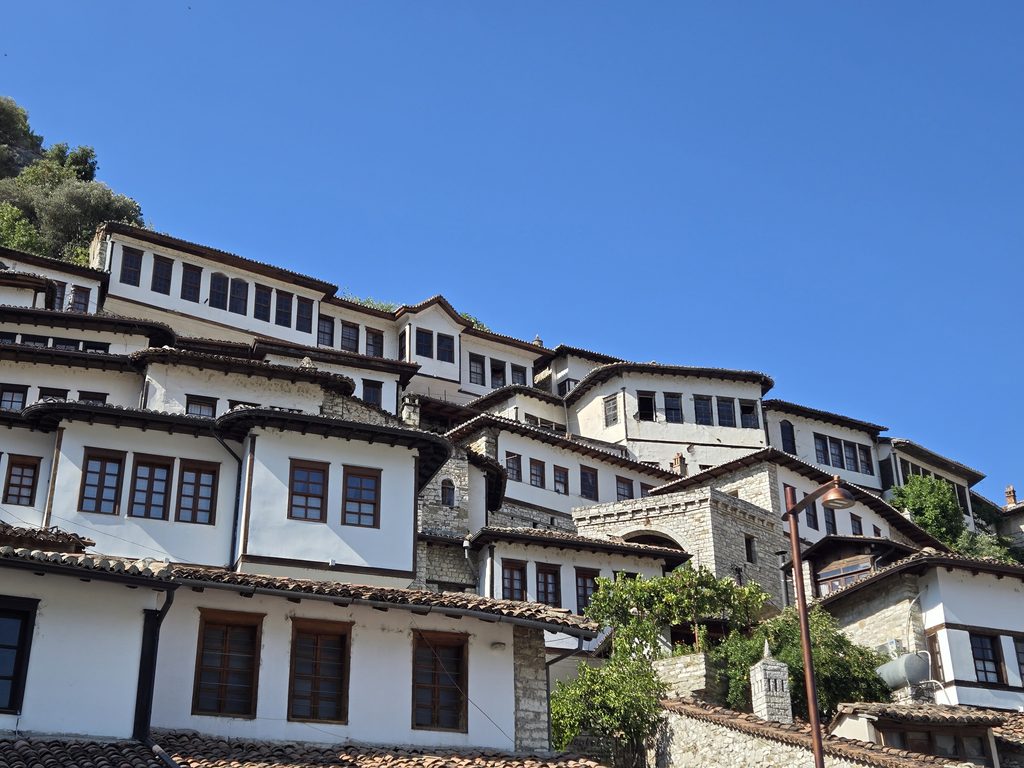
That tour was a small group while another I took to Berat was on one of those exasperating tour buses, the land equivalent of the large cruise ship, a blight on the landscape, vomiting out throngs of tourists out at each stop. Thankfully, there are not too many of these mega-buses, again because of the relative touristic obscurity of the country (though that will no doubt change – a country this beautiful and diverse, with a people so welcoming, will no doubt attract more and more visitors). An ancient site, Berat is an interesting place with a castle that stretches back to the Byzantines looking down on the plain far below. There lies a medieval town, whose architecture and old neighborhoods persist from Ottoman times. Slow, winding roads wend their way up and down historic districts separated by a small river, the shade of the alleyways and church courtyards giving brief respite from a furious sun (I visited in the midst of the ongoing European heat wave). Among the stone houses, I had a delicious traditional meal of stew and local wine to fortify me for the increasingly weary steps as I sought to explore every corner and crevice of the charming town.
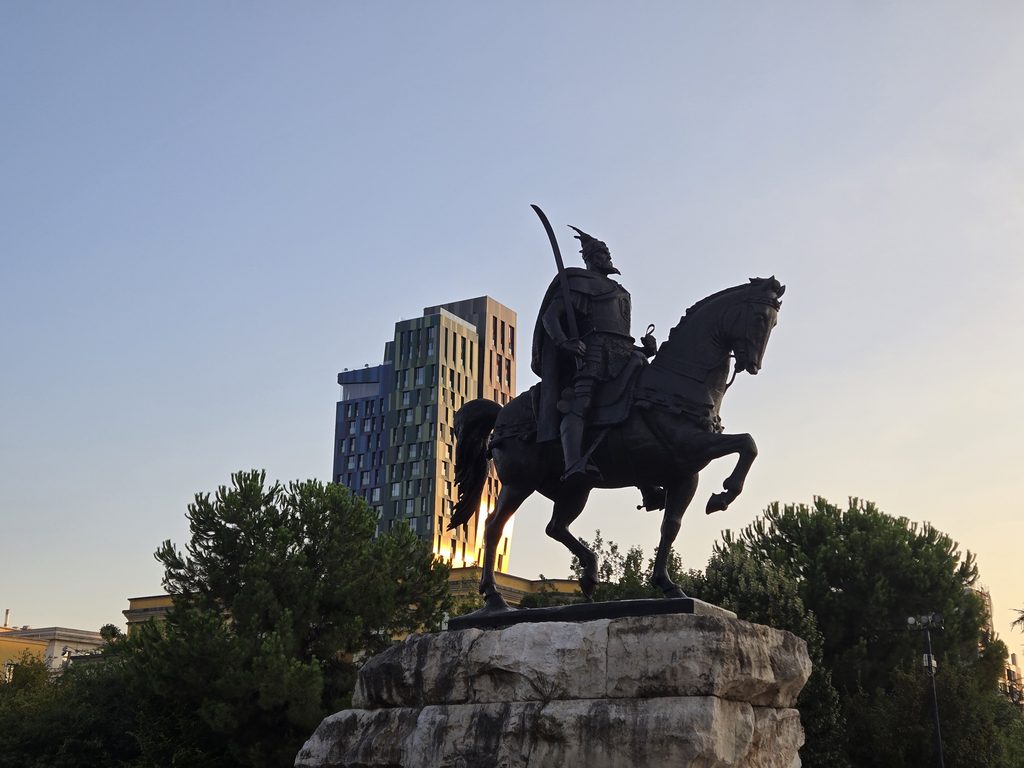
I spent some time exploring Tirana as well. A small city, it still bears the legacy of the repressive and regressive years of Communist rule, a Communism that towards the end resembled the isolated cruelty of North Korea. The regime fell in 1991 and in its aftermath, the nation has been generally united in its culture and nationalism and tolerance, where differences of geography and religion don’t cause the type of strife common across the world (politics on the other hand…). The country is poor in European terms but look around Tirana and you will see it is rich with life. The streets, whether in residential or commercial districts, are lined with cafes with people enjoying a coffee (unfortunately tea is in short supply) and a conversation at all hours of the day. The evenings until the late hours are full of energy – not frenetic but comforting and familial.
The cuisine is also excellent. From what I could gather, from discussions with locals and starting to read through Ismail Kadare’s works, the Albanian point of view on the Ottoman era is mixed at best. The Albanian people, like most of the Balkans, are fiercely independent and proud so any occupation by empire or otherwise, especially one on the order of centuries, will evoke strong feelings. The legacy of the Ottoman occupation does persist, in part in the language, which is rather unique. Its tone and flow resemble Italian (insofar it sounds like people are always arguing but in fact they are carrying on regular, lively conversation) but the language itself has no surviving close relatives. There are enough Turkish loan words to deceive me into thinking I could understand it (though in reality the complexity of simple concepts like Hello – Përshëndetje – and Thank you – faleminderit – confounded me). The Ottomans left some of their culinary legacy as well and the Albanians have combined this with influences from Greece to its south, Italy just across the Adriatic sea, its own rich culture stretching back centuries to the Illyrians and before, and a land of bounty, with olive oil and wine flowing freely, to create a wonderful and diverse cuisine.
– – –
On my last day in Albania, I visited the House of Leaves, a former building of Albania’s secret police, the Sigurimi, a somber and chilling experience; bought a copy of Nasreddin Hodja in Albanian off of a street bookseller and had a lively but broken conversation on the nature of identity (he insisted I was indeed Albanian); and enjoyed a wonderful homemade meal and spent wonderful time with my family. I sipped on homemade Albanian raki, enjoying a complex and delightful taste of golden raisins, and tried Çaj Mali, a surprising and refreshing mountain tea. The conversation flowed around me in Turkish, Albanian, and English, folding me into the comfortable rhythms of a domestic Sunday.
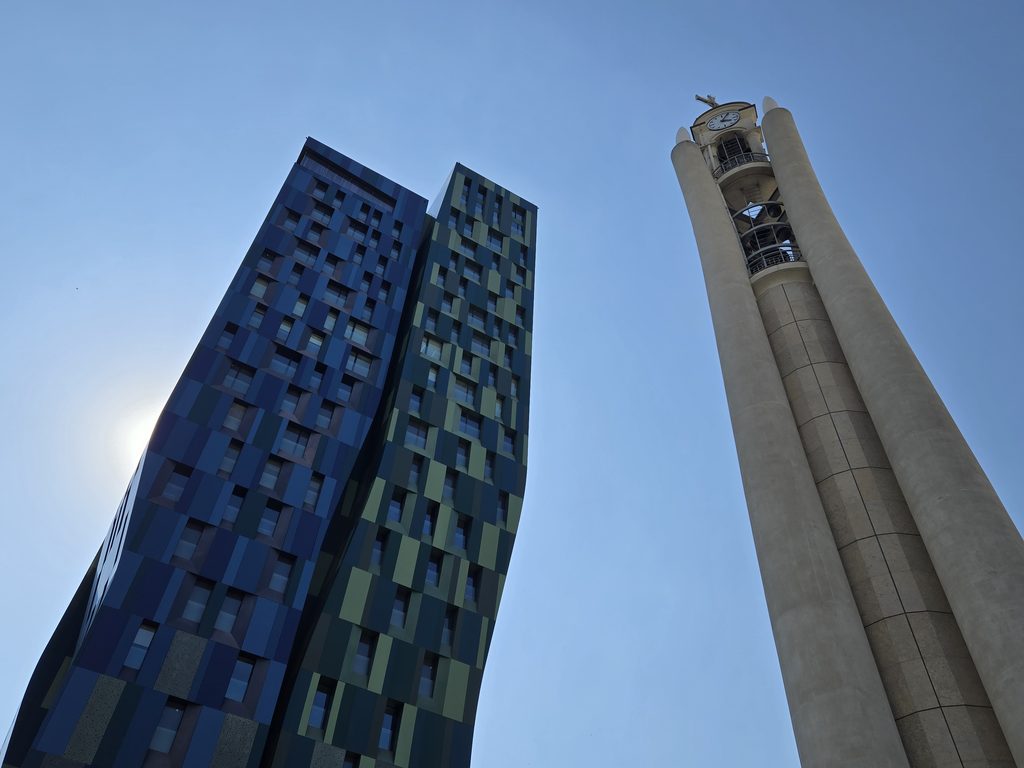
That evening, I attended the ongoing protests in Tirana. Called by some the Flamingo Revolution as they were sparked by a deal between the Albanian prime minister, Edi Rama, and our national son-in-law Jared Kushner to build a resort along a piece of pristine coast that is home to flamingos and other wildlife. The protests though are about much more, decrying the increasing cronyism of the Rama government, pushing for a better Albania with hope and opportunity as more and more youth are emigrating elsewhere. I attended on the 63rd consecutive night and as I write this they continue, reaching their 100th day. The demonstrations themselves are passionate but peaceful, emotional but not inflammatory, united in a common cause. On a sweltering summer night, attendance was strong, with children drawing on sidewalks with chalk, dozens of deep-red flags with Albania’s double-eagled crest billowing in the slight breeze, signs with messages of hope and change lending a sense of positivity in the face of despair.
– – –
So am I Albanian? My great-great-grandfather, Mehmet Derrala, was an ethnic Albanian who for most of his life was an officer in the Ottoman military before fighting for the independence of his people: does that matter to me now, more than one hundred years later? Indeed, all of my great-great-grandparents from my mother’s side hail from ethnic Albanian lands. And so…? Is identity driven by family and blood, is it by citizenship and geography, is it local or regional or national? I think most of us would agree that ultimately it is what we as individuals choose to prioritize. But I also find that most people tend to keep their identities simple, removing complexities and conflicts of nature in favor of an ever smaller set of labels. It is so much more interesting when you embrace and explore nuance and difference. And so I have decided that, yes, I am indeed Albanian, as I am so many other things as well, and what that means to my identity, my personality, and my outlook on the world is something that will evolve with time and increased maturity.