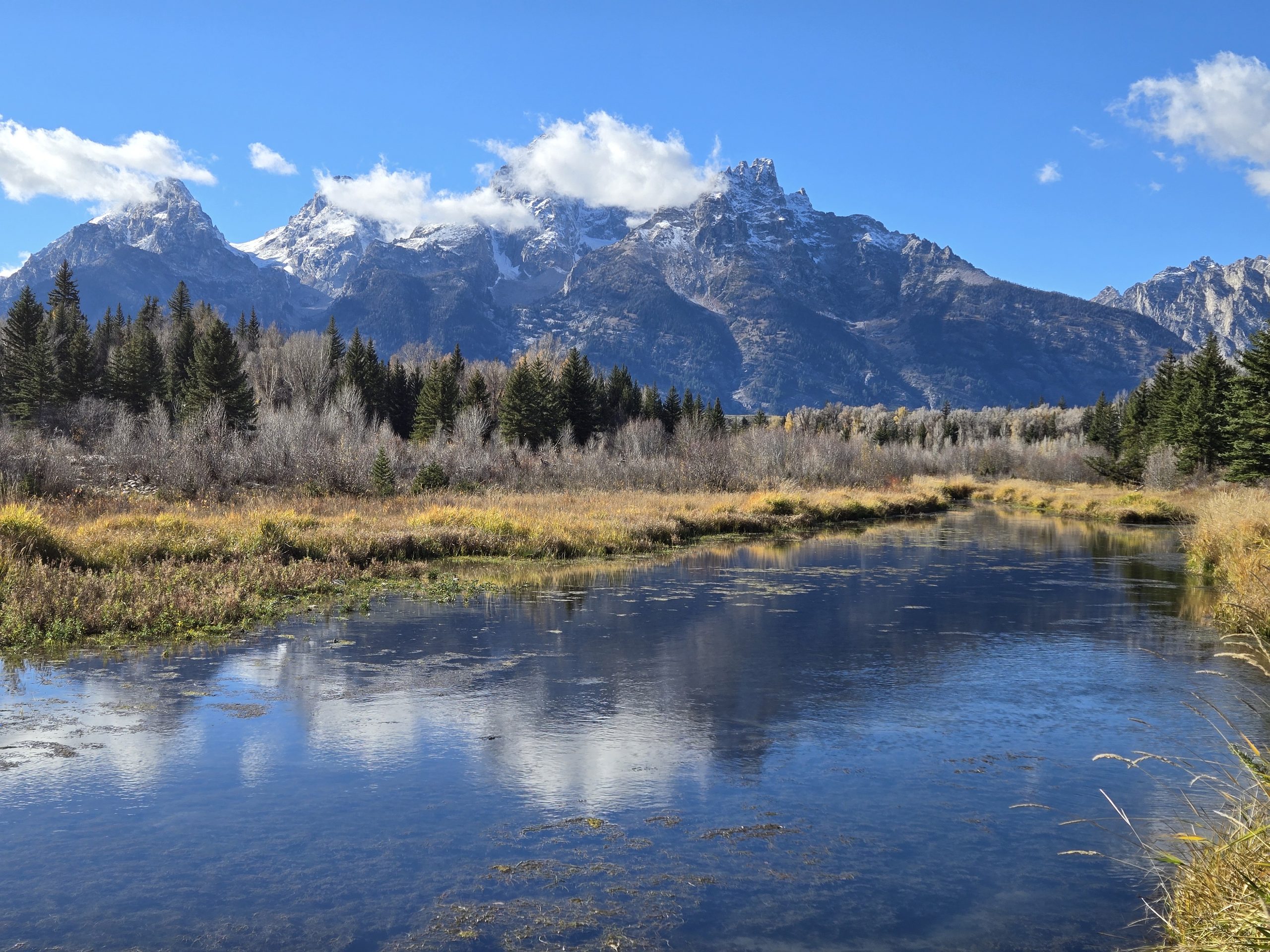
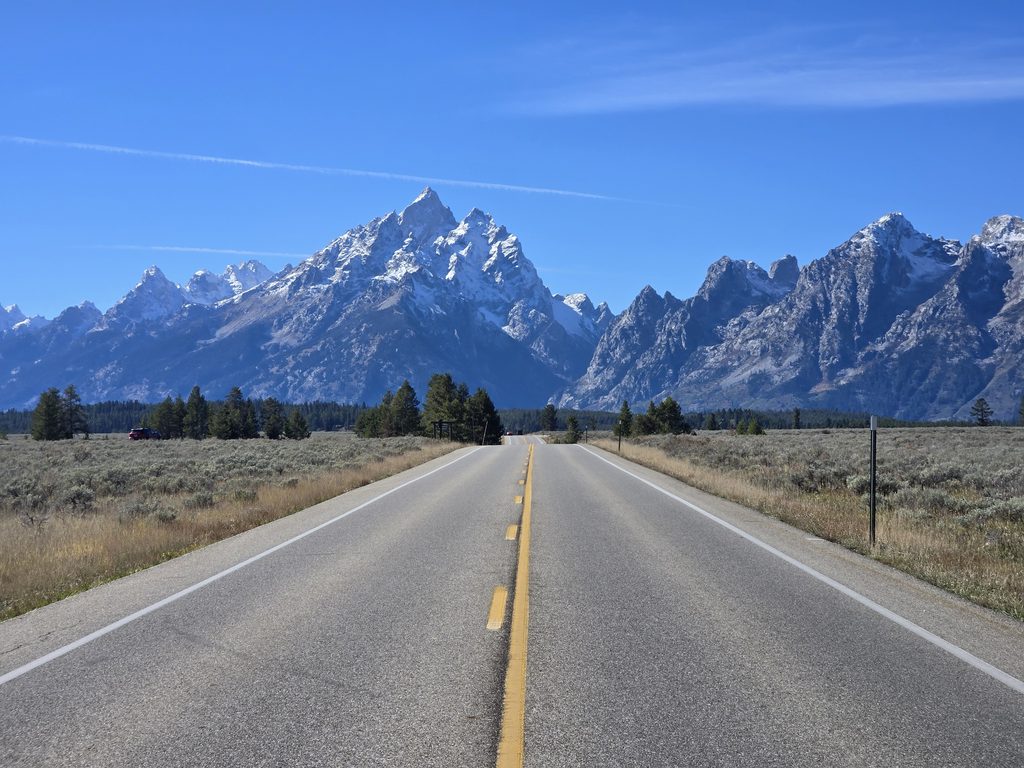
While Yellowstone is the amusement park of national parks – and I mean that in a highly complimentary way – Grand Teton is nature painting the picture-perfect postcard. It addresses the question: can you get bored of seeing the same view, over and over, from multiple different angles and multiple different perspectives? When that view is of the Teton mountain range, the answer is a resounding no. Whether hiking into its canyons or glimpsing it from afar across large valleys or pondering its reflections where the Snake River becomes little more than a creek or wondering at the backdrop of pioneer homes, this relatively small and young set of mountains is a delight for the eyes and a bastion of adventure.
Grand Teton National Park lies due south of Yellowstone, connected by the John D. Rockefeller, Jr. Memorial Parkway. The road past the south entrance of Yellowstone sooner rather than later opens up on the vast valley known as Jackson Hole, meeting the oxbow bends of the Snake River on its route from the Rocky Mountains to the Columbia River. Besides being one of the more popular parks in the country, Grand Teton also hosts an annual conference for economic policy, put on by the Federal Reserve Bank of Kansas City. Here, the mountains formed by tectonic stretching and faulting oversee declarations and proclamations with tectonic impacts on the world economy.
It is a setting and landscape of immense beauty. While ultimately an ill-conceived idea, it is not surprising that Major League Baseball explored staging a baseball game here. Photographed by Ansel Adams as part of the effort to earn the park protected status, the Teton peaks and jagged slopes pierce the sky with Grand Teton’s particularly sharp silhouette like lightning in reverse. The mountains are rich with wildlife, especially bears and moose, while the elk roam widely across the Jackson Hole valley as they wander their migratory paths.
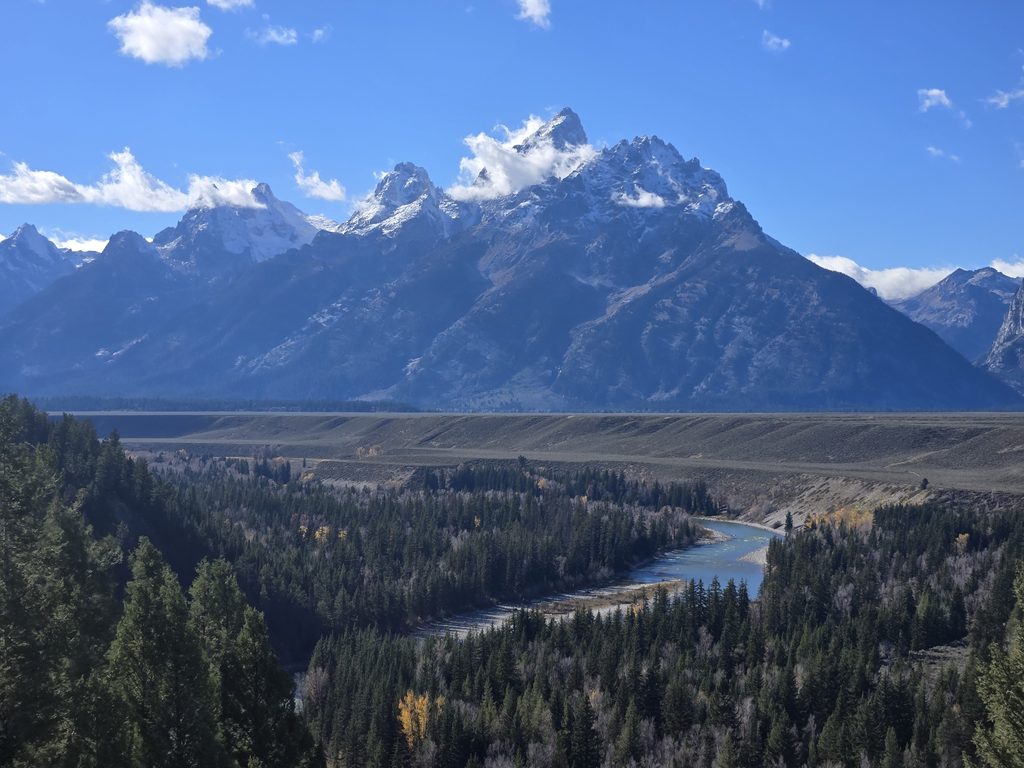
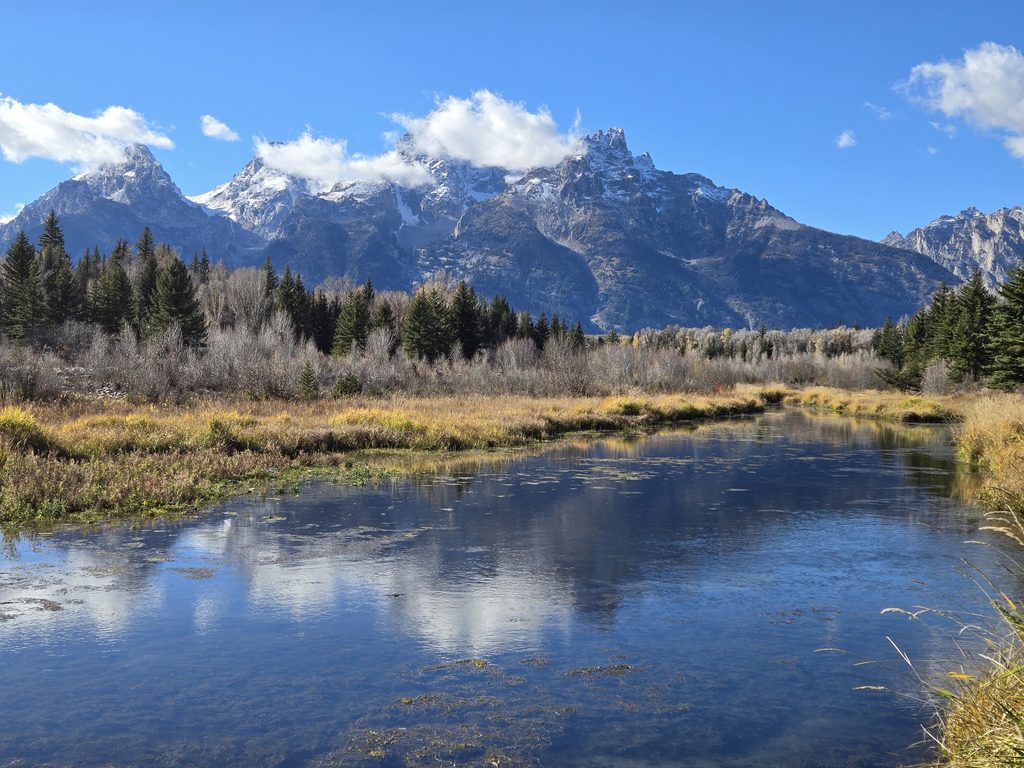
I spent a full day and part of a day around Grand Teton. My first afternoon was spent along viewpoints, leaving each with a wry shake of my head at the wonder of the scenery. On a short stroll along a stream of the Snake River at Schwabacher Landing, the mountains shimmered in the clear emerald waters. The road leading down to the landing was one of the more adventurous parts of the day, its heavily potholed and puddled single lane stretching the limits of the suspension of my rental car while I bounced about in my seat in random directions.
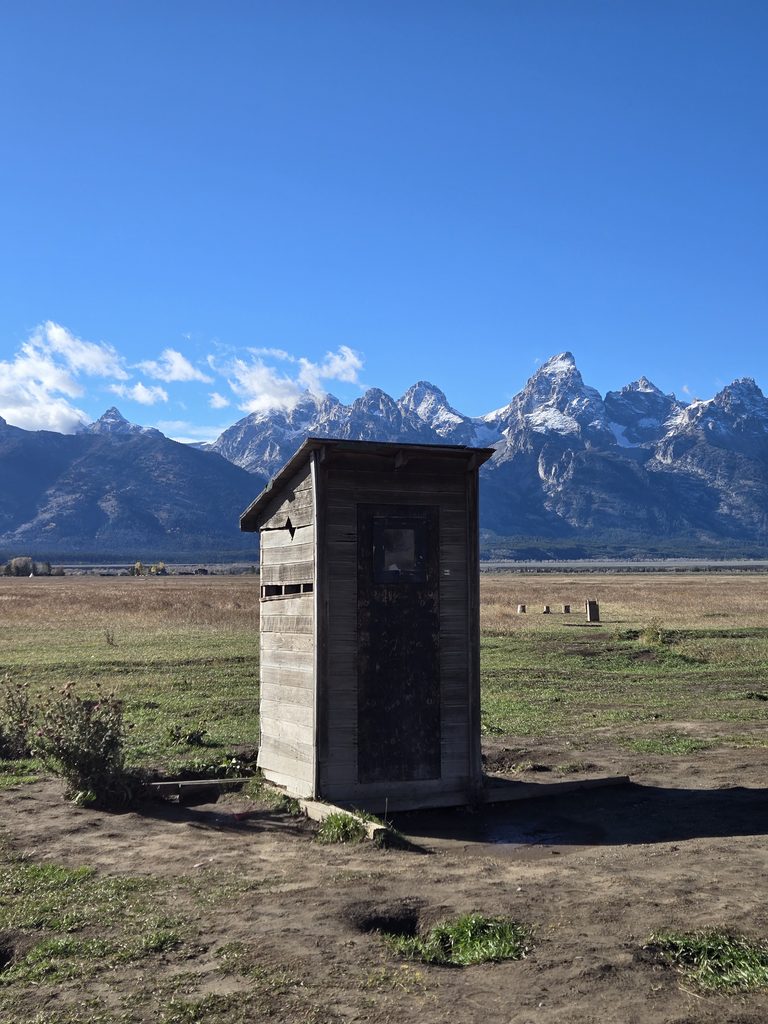
Later, I stopped by the so-called Mormon Row, an historic farming community from the 19th century with a few surviving homesteads. These homesteaders were not discovering anything new: Jackson Hole has evidence of human occupation, or at the very least nomadic visitation, more than 11,000 years old. Still, permanent settlement is difficult as the winters are harsh and the soil unforgiving. But from a real estate perspective it’s all about the view isn’t it? There’s something to be said for heading to the outhouse on a chilly morning and being greeted by a grand view of the mountains in the background.
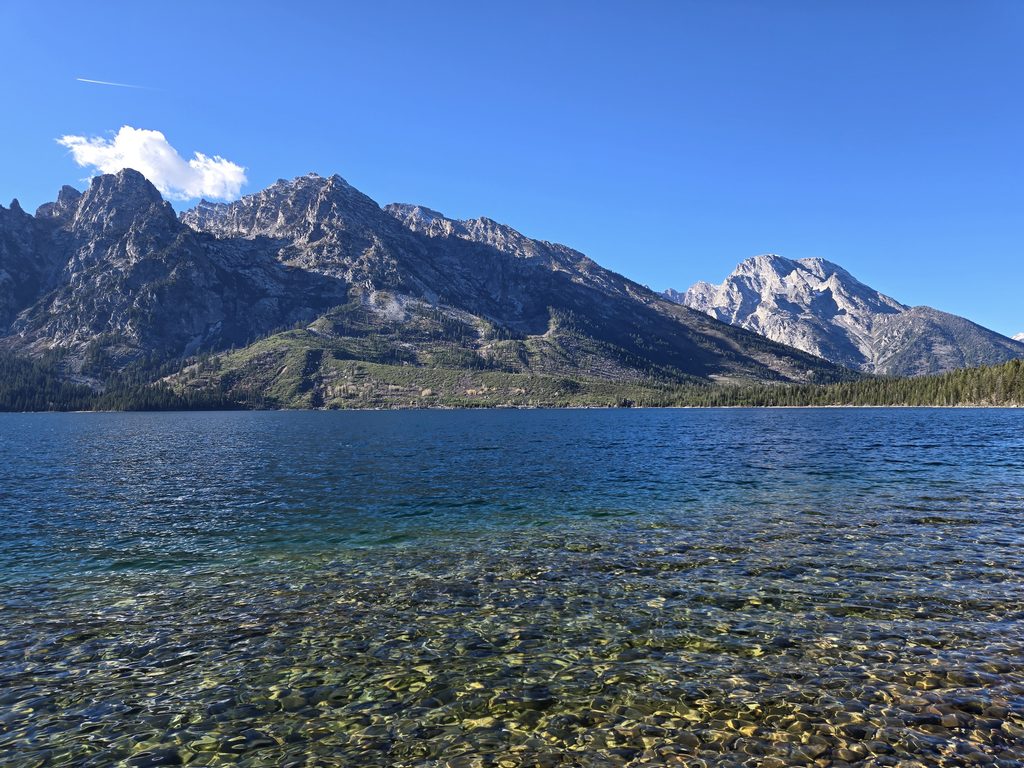
While the viewpoints are treasures to be cherished, the true paradise of Grand Teton lies in its hiking trails. I ended up hiking two trails, including one that I will likely count amongst my favorites for years to come. Jenny Lake is the park’s most popular trail – and location for that matter (the Federal Reserve meeting is at the Jenny Lake Lodge) – and for good reason. The common route ascends into the mountains along the west edge of the lake, making its way through forested slopes and lakeside paths. A short hop, skip, and jump beyond the northern end of the terminus lie Hidden Falls and Inspiration Point. Hidden Falls is nice enough to earn begrudging accolades from me though I think I more enjoyed the chipmunks zipping around as they sought to fatten themselves up before the upcoming winter.
Inspiration Point sits a few hundred feet above the lake and provides an expansive view of the valley beyond. Turn around and the piercing peak of Grand Teton looms nearby. It is also the beginning of Cascade Canyon with its rugged and beautiful trail leading deeper into the mountains. I only followed the trail for a mile or two of its length as I wanted to explore other parts of the park but I would return one day without a second thought to travel its full length and beyond to Lake Solitude. For all of the national parks I have visited, it was in Cascade Canyon where I felt as close as I’ll likely get to remote wilderness ahead of the pending AI apocalypse.
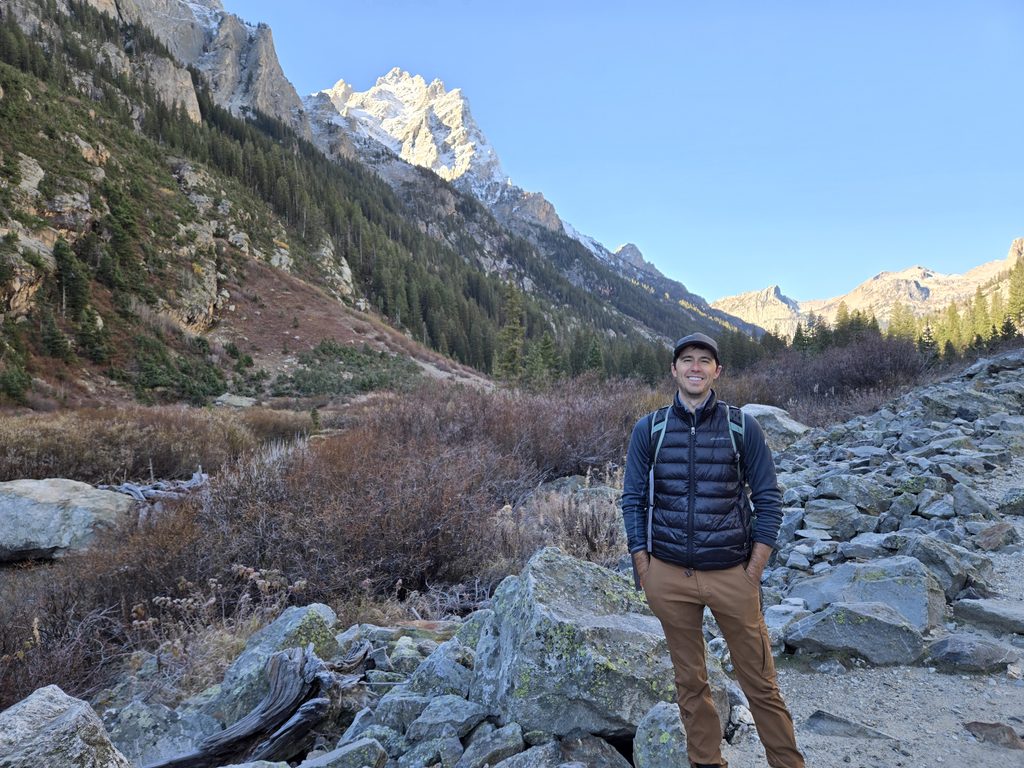
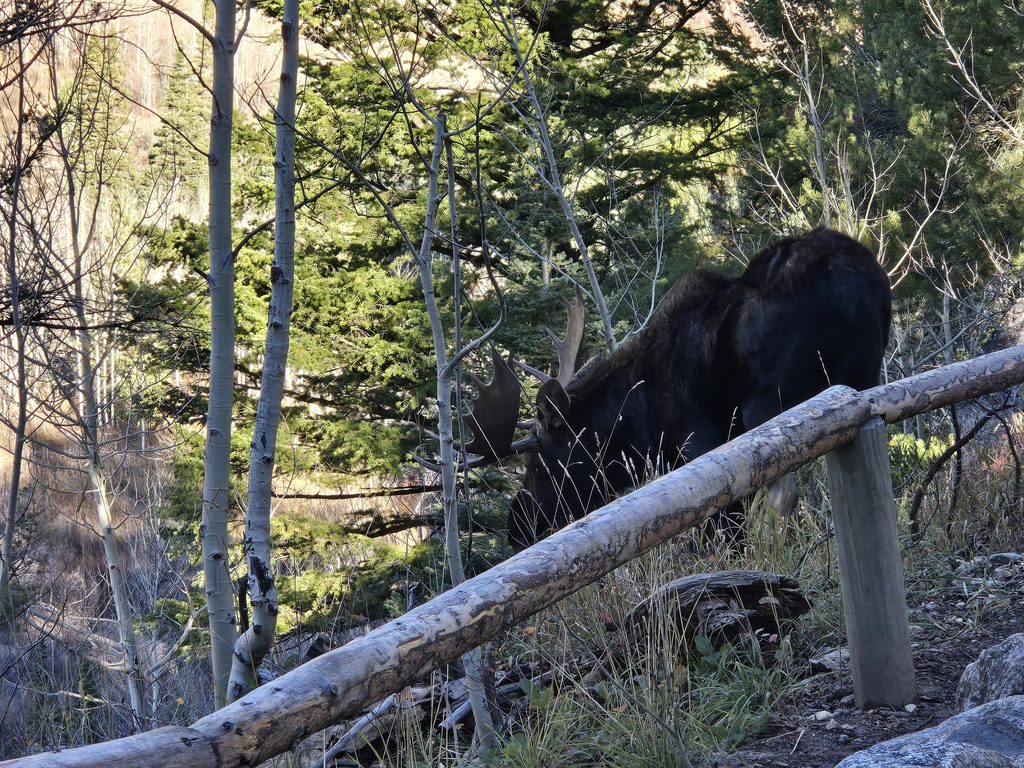
As I started early-ish, the trail included few people though that did heighten my concerns around bear activity. However, aside from the chipmunks, the only wild animals I saw were a family of moose near the beginning of the trail and a cow moose lazily ruminating at the head of Cascade Canyon. I also made sure there were always people in my general vicinity and hoped that bears would find them more appetizing, ignoring of course that bears don’t prey on large mammals and the risk is more about surprising them. I consider myself to be rather empathetic but my empathy extends only so far.
The return trek was not quite so enjoyable, especially as I rounded Inspiration Point in the late morning. The volume of people increased exponentially, including a couple of groups of young whippersnappers insistent on playing music rather loudly. While it is a tactic to alert bears to your presence, it was most certainly unnecessary as no animal could be oblivious to the mass of humans walking through their natural habitat.
And therein lies one of the central tensions of national parks. Complaining about crowds on a trail is like complaining about traffic: am I not also part of the crowd? Yes, I start earlier on trails and share a sort of fraternal bonhomie with others who do as well but there is a deep hypocrisy to my disdain of crowded trails as I deserve no less and no more my experience of nature than others. And what about the park overall? The amount of people on the trail less than two weeks before the park closed for the season sent shudders down my spine when I considered how crowded it must be in the high season – especially as a boat service cuts out two miles of hiking either way. It is an immense challenge and balance for the National Park Service to preserve the land under their protection while making it available for the enjoyment of all.
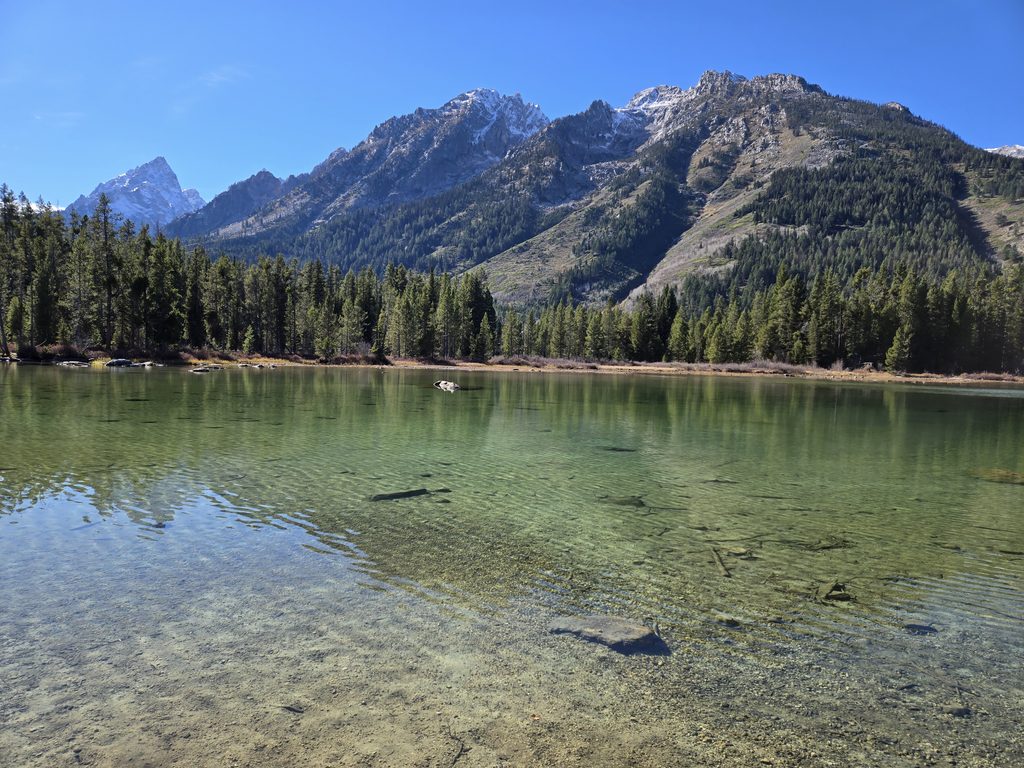
After some more scenic driving, my second hike of the day was another excellent albeit not as spectacular as Jenny Lake. While randomly dipping into and out of different stops, I decided to hike first to Leigh Lake from the String Lake trail and when I determined it was not love at first sight, I backtracked slightly to do the full five mile loop of String Lake. This was not my original plan for the afternoon but it was a decision well made: the track leads through a forested slope before opening up on a wide ridge at the bottom of a rolling slope. String Lake, with its strangely compelling emerald color, more muted than bright but yet still clear and glimmering, lay some ways below me with the openness of Jackson Hole broadening out to the horizon beyond it. I exchanged cheesy old people jokes with a couple of the few people I saw on the trail, earning myself a second punch on the arm at a national park this month.
The rest of my day included a short climb down to the eastern shores of Jenny Lake for a brief sojourn of contemplation and reflection. I spent my final non-hotel hours in the area driving back into the park, as I had the night before, to gaze at the stars as Grand Teton is a certified Dark Sky park. The experience was both awe-inspiring and disappointing. The first night I posted up at Mormon Row per some online recommendations. The waxing moon had set early and I was able to see wispy outlines of the Milky Way. But for some reason the road by the homesteads had a decent amount of traffic for a random country lane and the headlights were especially blinding in the deep, dark tenebris. I called it a night when a guy with a huge trailer decided to set up shop in the small parking lot, ostentatiously making as much noise and light as humanly possible, driving away the few stargazers that had ventured out into the evening freeze.
The second night I decided to drive into the park proper and set up shop at an overlook. The location was ideal but the conditions not as much. Over the course of 24 hours, the moon had transformed from a slim crescent to a bright wedge, setting much later than the previous evening. Still, on both nights, I was able to grasp a few brief windows of the immensity of the heavens above. The feeling is paradoxical. There are so many stars, overwhelmingly so. They make the sky seem bigger and more mysterious. At the same time, it feels almost constricting. Because there are so many and so visible, their density creates a natural ceiling, almost like I am in the largest observatory in the world. I have already written a few times in this series about how different our contemporary experience of the world is from even just 100 years ago. But I feel like the starkest difference is that we simply do not see the stars anymore at night. What for millions of years was a nightly constant has now become a novelty.
I’ll end with a few words on Jackson, which is the hoitiest and toitiest town I’ve encountered at the edge of a national park. I spent little time there, just a couple of meals and a short stroll through the city center. It’s a strange place, for an easterner at least: definitely a tourist town, serving as it does the park and the surroundings in all seasons, including ski season, with shops selling tshirts on every street corner; but also a substantial town with more than 10,000 residents creating its own culture. Some of those residents turn out to be rather famous people, drawn there by generous tax codes. Had I more time and inclination, I would have struck up conversations to understand the place more, the permanence and the temporality of it, whether the cowboy culture was real or a final, hopeful tether to the history of the place.
And thus came to a close four days and change in the Greater Yellowstone area, where the skies are bigger and bison roam. I did so much in those few days but barely scratched the surface of what the area has to offer. Yellowstone is the third most popular park by visitation in the country and Grand Teton the eighth. The only thing surprising about this is that they are not higher on the list. I have now at last count visited over twenty national parks and these are two of the most astonishing and awesome. One day I will return.