In the classic science fiction film Blade Runner, the primary plotline and philosophical theme concerns replicants, bioengineered humanoids grown from flesh and blood. Besides the central tension of whether Deckard, the eponymous blade runner protagonist played by Harrison Ford, is a replicant, the film also explores and asks what it means to be human. It is one of the most powerful questions that literature can contend with and no genre is better equipped to do so than science fiction. It is also an intensely relevant concern for our contemporary times as a millenarian flavor of transhumanism is in ascendance among the Silicon Valley merchant prince billionaire class that has undue and extremely concerning influence over the course of our geopolitical future.
(As an aside, Blade Runner is based on Philip K. Dick’s classic novel “Do Androids Dream of Electric Sheep?” which was published in 1968. Besides being a fascinating novel, like most of his work, the title is delightful and representative of a period from the 1950s and 1960s when science fiction works had extraordinarily evocative and compelling titles. Some that come to mind include: “I Have no Mouth and I Must Scream;” “The Moon is a Harsh Mistress;” and “The Left Hand of Darkness.”)
But just as fascinating as the theme on humans and humanity is the film’s treatment of animals. In Blade Runner, real animals are vanishingly rare, most having gone extinct in an ecological collapse. One of the ways that a blade runner determines whether a being is human or replicant is a test that measures the level of empathetic reaction to the death or injury of an animal. While not the central theme of the film, it is an ominous warning of where our world may be headed as animals, wild animals, are increasingly squeezed by shrinking habitats and climate change.
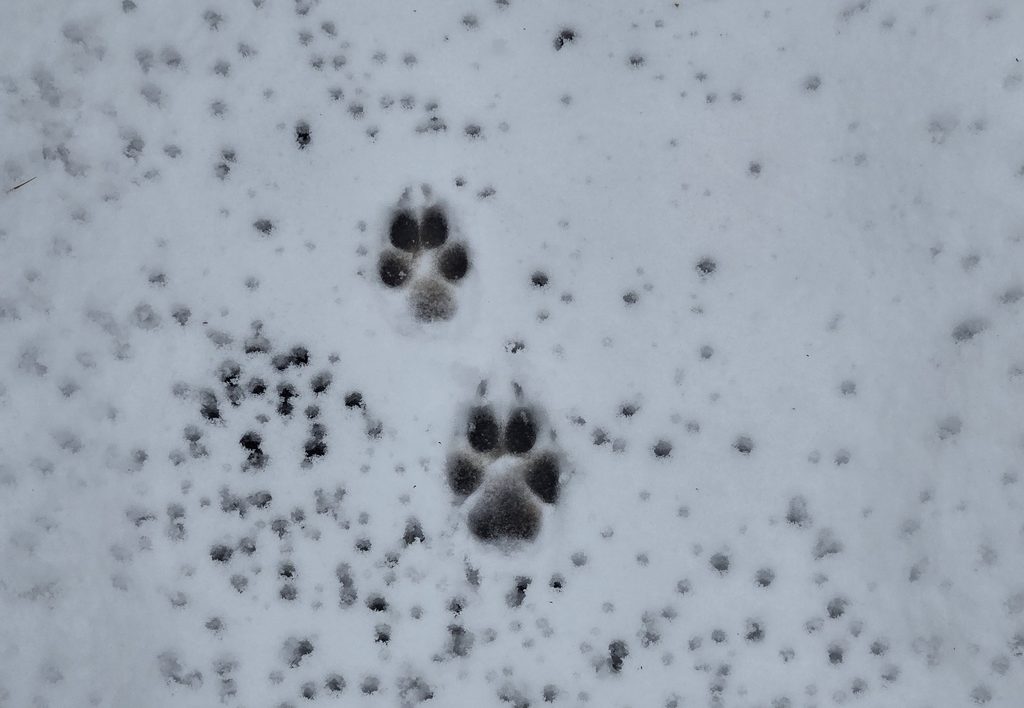
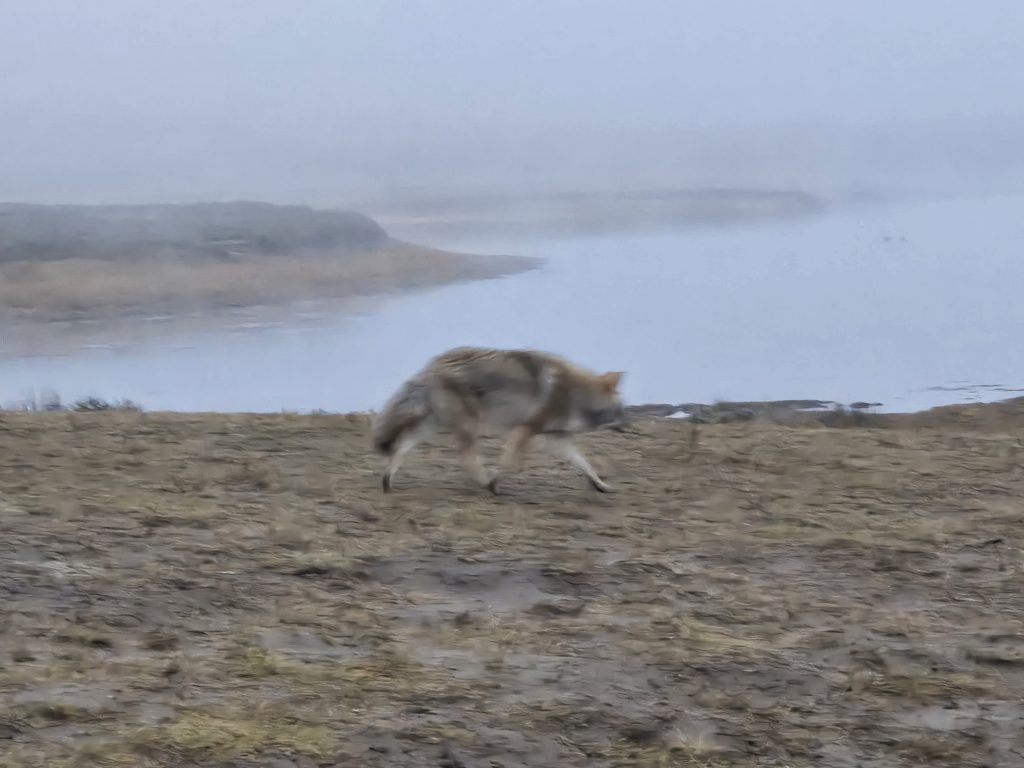
Yellowstone is one of the few places in the country where it is easy to see animals in their natural habitat. The enduring popularity of its wildlife – and safaris in general – point to how precious we view the animal kingdom but also how fleeting our experience with them is. If you have read through my posts this year, you know that I often ponder how life is such a different experience through time and space. Yellowstone is a shining example: it is only in the very recent history of our species that we now see non-domesticated animals as incongruous with the environment around us, unless they are birds or squirrels. Even the deer that sometimes frequent the woods behind my home, and nosh on my neighbors’ plants, are pleasant surprises rather than the commonplace they would have once been.
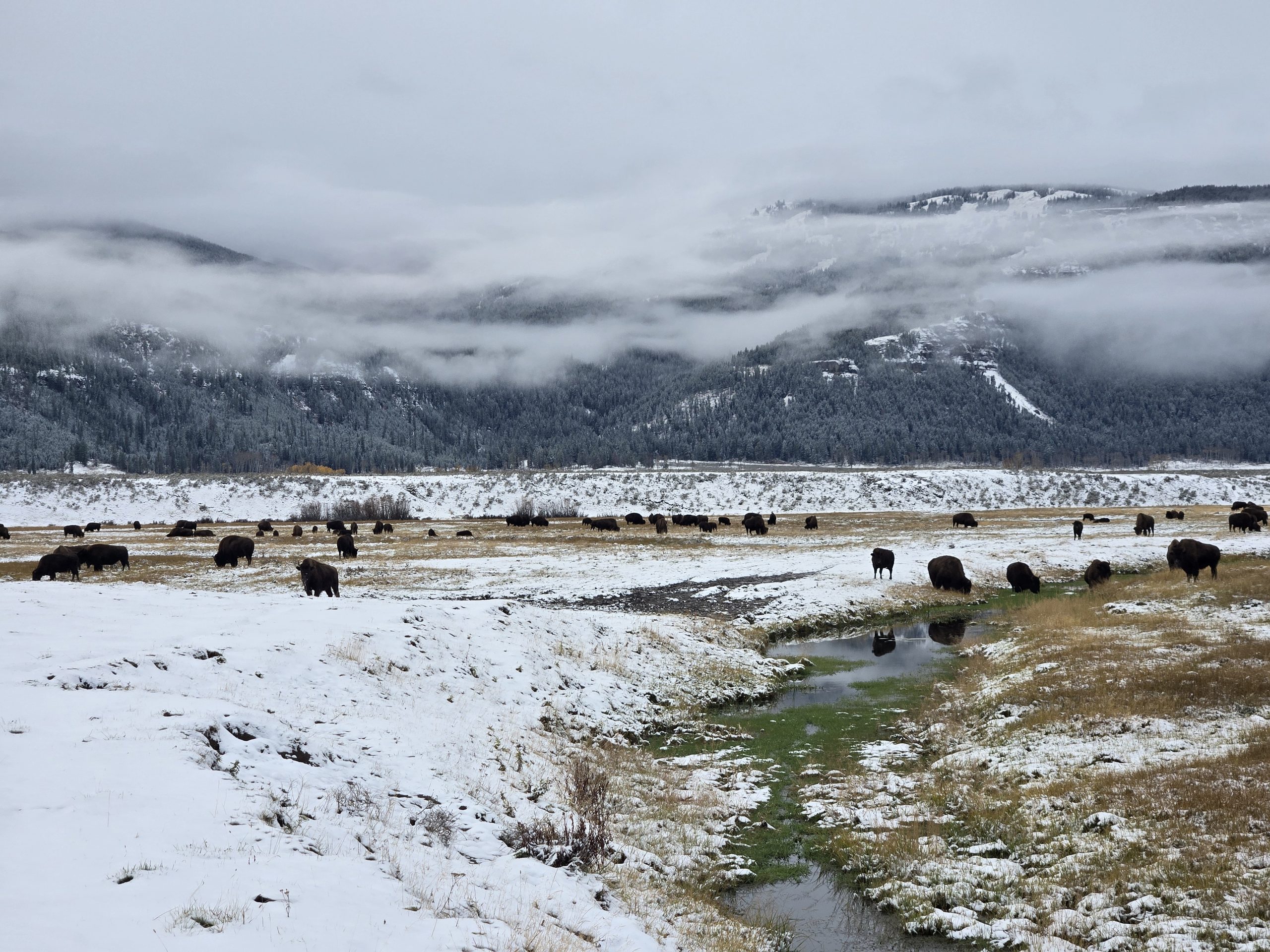
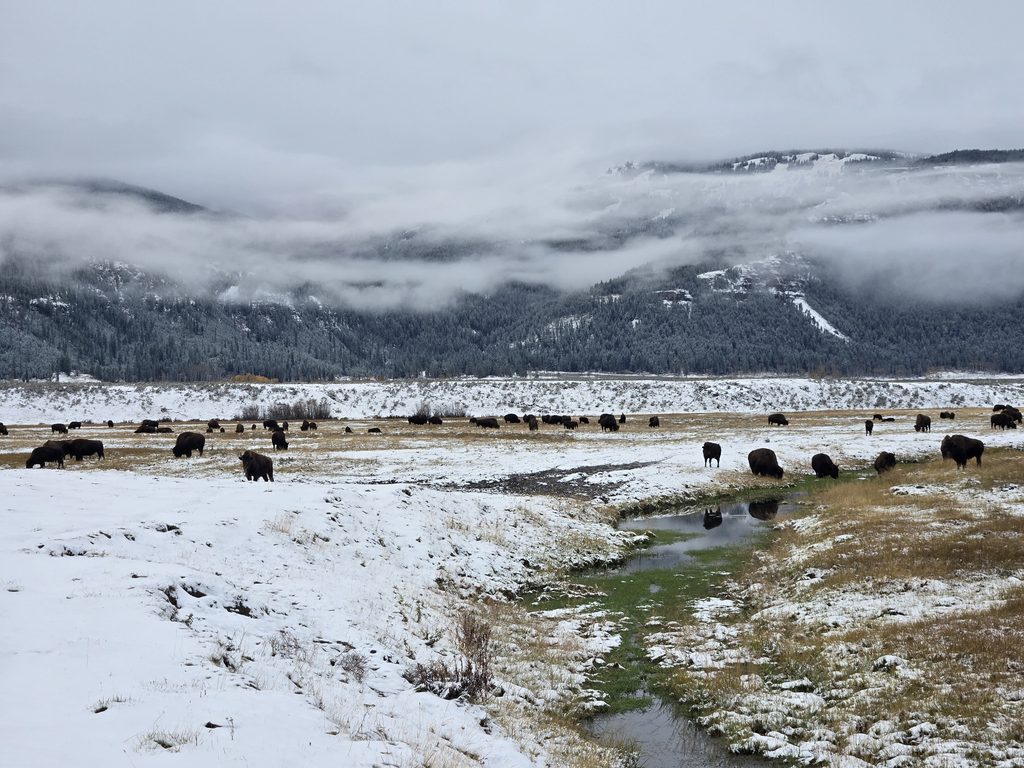
The iconic animal of Yellowstone is the bison. It is also one of the most resounding conservation success stories and one that provides hope that wildlife can flourish aside our ravenous and capacious appetites for growth and sprawl. Once near extinction in the late 19th century, now herds of bison roam the Lamar and Hayden valleys of Yellowstone, while individuals or small groups can be found around almost every corner of the park, popping up where you least expect them. There is certainly a thrill, perhaps one driven by novelty, to find a bison ambling in the middle of the road. There is also a wry and ponderous sense of connection when that same bison gives you a side eye as you drive past it, implying that it could easily do serious damage to your vehicle but it chooses not to as it’s just too damn cold.
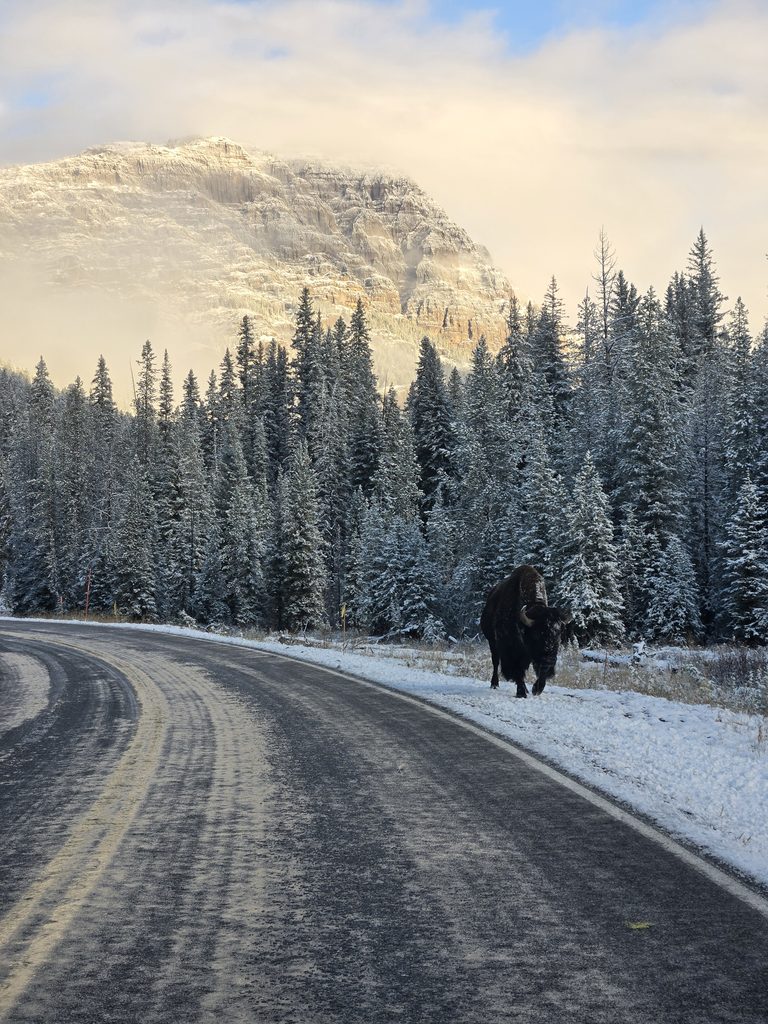
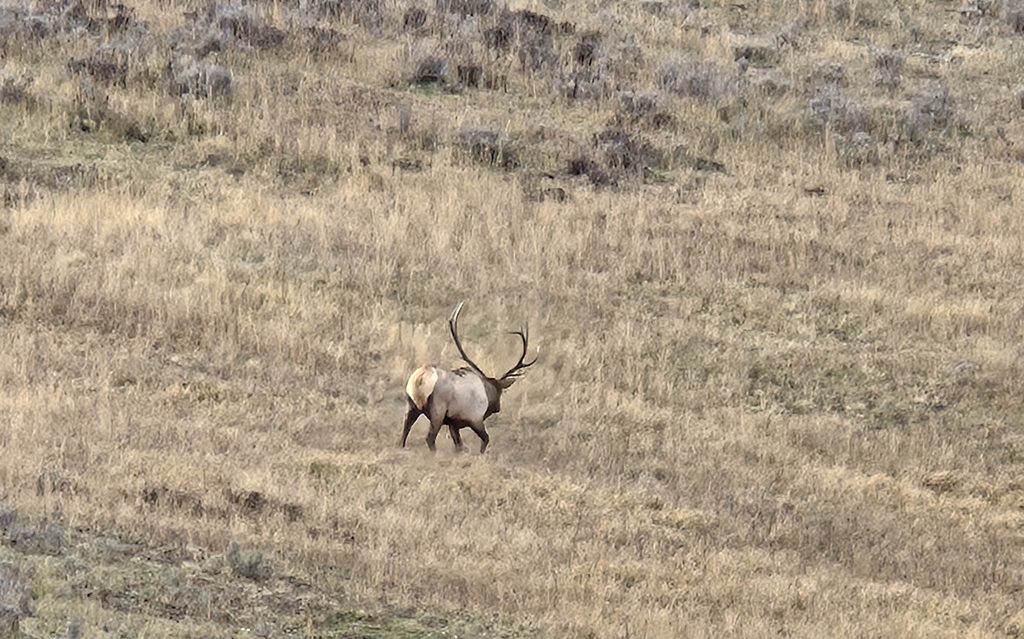
While the bison is ubiquitous, Yellowstone is home to many more animals: bears, wolves, coyotes, elk, moose, and smaller mammals. I had hoped to see bears and woke up at oh-dark-thirty two mornings to reach first the Lamar Valley and the next day the Hayden Valley by the pre-sunrise dawn light when supposedly these elusive predators roamed the plains. No luck for me, nor for the hordes of others who had shown up with scopes and high-powered cameras. I chuckled, in solidarity of course as I was doing the same, as throngs of humans watched for wolves (supposedly I did see one though it was really just a black smudge that others said was a wolf) and transformed into National Geographic photographers the moment they saw a buck elk. I don’t blame them as the elk is a spectacular creature and I saw at least two which would have been prize quarries for barbarous medieval hunts.
The throngs of wildlife watchers I saw in mid-October were probably a fraction of the visitors hoping for glimpses during the high season. There is a challenge in balancing the natural needs of wildlife and our human ambitions to experience them. Stories and videos abound of animals in conflict with humans. A video of a raging bison launching a man in the air went a bit viral earlier this year whereas just a few days ago, soon after I had left the park, a man caught video of a bison ramming his truck in the wee hours of the morning. The National Park Service has warnings and rules posted throughout the park but in neither case was the human doing anything wrong: it’s just a matter of fortune that they were in the wrong place at the wrong time.
There is also a greater tension beyond Yellowstone in how humans and wildlife interact. The Big Sky country of Montana and Idaho and Wyoming is full of ranches and farms. The conflict between these elements of civilization and the predators that roam its boundaries is an ages-old story, one memorialized in one of the most well-known fables of our culture: The Boy Who Cried Wolf. Driving down from Bozeman, I saw a billboard that said something along the lines of “Delist Grizzly Bears. A Conversation Success Story.” I at first thought that there must be some conservation organization called Delist, which I thought an odd word, perhaps simply missing the accent grave that would give it a French je ne sais quoi pronunciation, until the next day I realized it was saying de-list. As in de-listing it as a threatened species under the Endangered Species Act. Indeed, the status of both bears and wolves have been very much in the forefront of the Department of Interior’s political agenda this year. While my initial reaction is one of horror at the idea of removing protections for any animal, I’m also in no position to opine given that the primary animal life I encounter where I live consists of squirrels and tiny dogs pushed around in prams.
Many if not most of us have lost our connection to the natural world. Hiking, camping, fishing, and other outdoor activities are wildly popular but are generally recreational activities, done here and there as time allows for fun and respite. Our physical lives unfold primarily in concrete jungles and our mental existence in virtual worlds and mediums. There are a fortunate few who continue to co-exist with wildlife in positive and enriching ways but the rest of us are generally bereft of animal experiences. I am at least lucky that I wake up to birdsong every morning but I wonder for how much longer. Conservation may seem like one of our lesser priorities in an increasingly challenging world but it is vital to our natural balance. Long may there be conservationists and ecological preservations throughout the world if nothing else to remind us that the wonders of life extend beyond the limits of our human ambition.