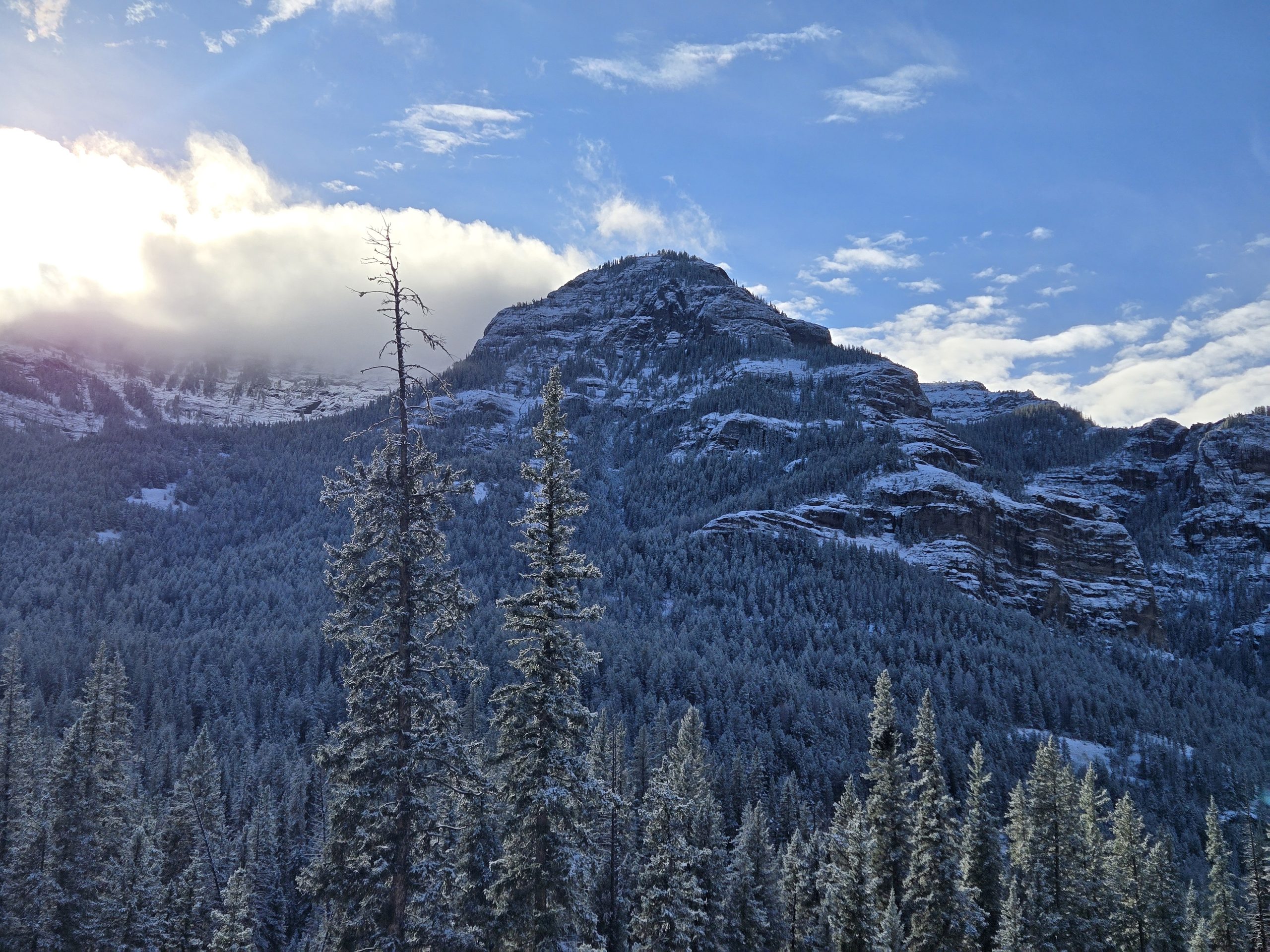
Yellowstone, designated as the nation’s first national park in 1872, has several iconic images: the Old Faithful geyser, the ubiquitous bison, the travertine terraces of Mammoth Springs, the Grand Prismatic, and the one where its name comes from: the Lower Falls of the Yellowstone River at Artist Point. The Yellowstone River flows throughout the park, originating from the Absaroka Range to the southeast and exiting in the north by Gardiner until it eventually winds its way to meet the Missouri River somewhere in North Dakota. Along the way, it fills Yellowstone Lake, carves the dramatic Grand Canyon of the Yellowstone (the location of Artist Point), feeds gushing waterfalls, visits lush forests, and waters vast plains, alternating as all great rivers do between powerful currents and placid indolence.
It is one of many rivers in the park: the Gardner, Madison, Gibbon, Firehole, Snake, and Lamar rivers all find room to roam in the wilderness, as do the many creeks and lakes that are fed by the rivers. Four mountain ranges call parts of the park their home: the aforementioned Absaroka Range, the Gallatin range near the north entrance, and two smaller ranges, the Washburn and Red Mountains, located entirely within the park’s boundaries. While my disinterest in waterfalls is well-documented, those who enjoy chasing them can find hundreds of all shapes and sizes.
It is part of the magic and allure of Yellowstone that while animals and geothermal features are top drawer attractions, the beauty and vastness and diversity of its nature is just as profound as any of the other natural parks. The park is traversed via a figure-eight scenic loop and it truly is scenic as it makes its way through an endless array of ecosystems begging for a pullover and a photo. I spent two full days and two half-days in Yellowstone and managed to “check the boxes” but the experiences on offer demand longer and repeated visits. While the hiking is not really top-notch, recreational possibilities abound, from rafting to fly fishing.
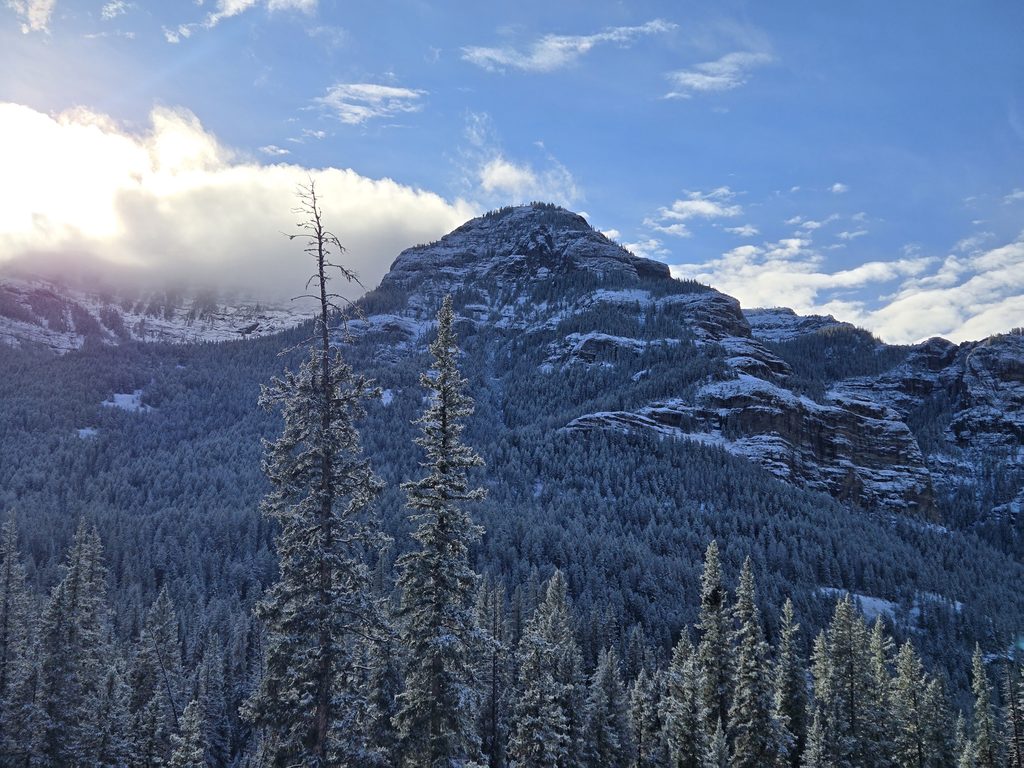
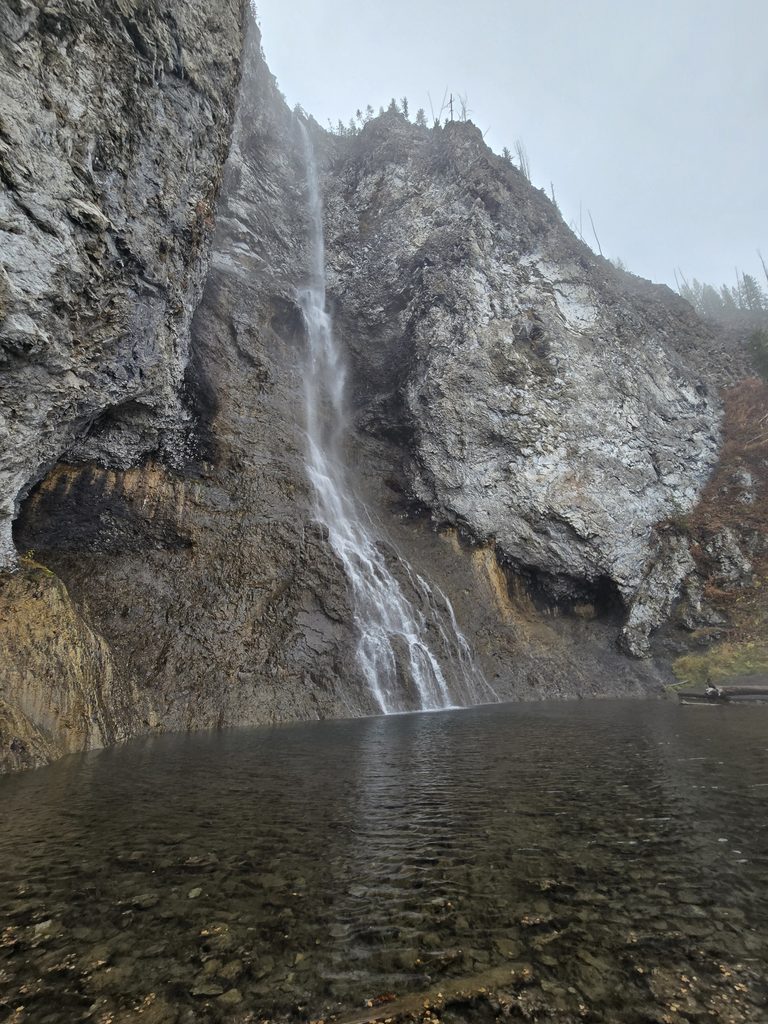
I did still get my hiking steps, though mostly through scenic walks. A morning traipse in the Lamar Valley brought me close to a large herd of bison, which cut the walk short as they crowded around the path. Unfortunately I have no special powers of bison whispering and found no reason to continue. Another hike behind the Grand Prismatic Spring took me to Fairy Falls, which was pleasant enough as there were few people there and the opportunities for exploration were enjoyable. Oddly, the two people I encountered when I first arrived kept taking pictures of a rocky slope instead of the waterfall. No amount of furtive investigation on my part revealed the purpose of their intense photography and their dour demeanors dissuaded conversation. While I am generally cheerful on trails, I too have a powerful resting bitch face when needed so I can respect their state of mind.
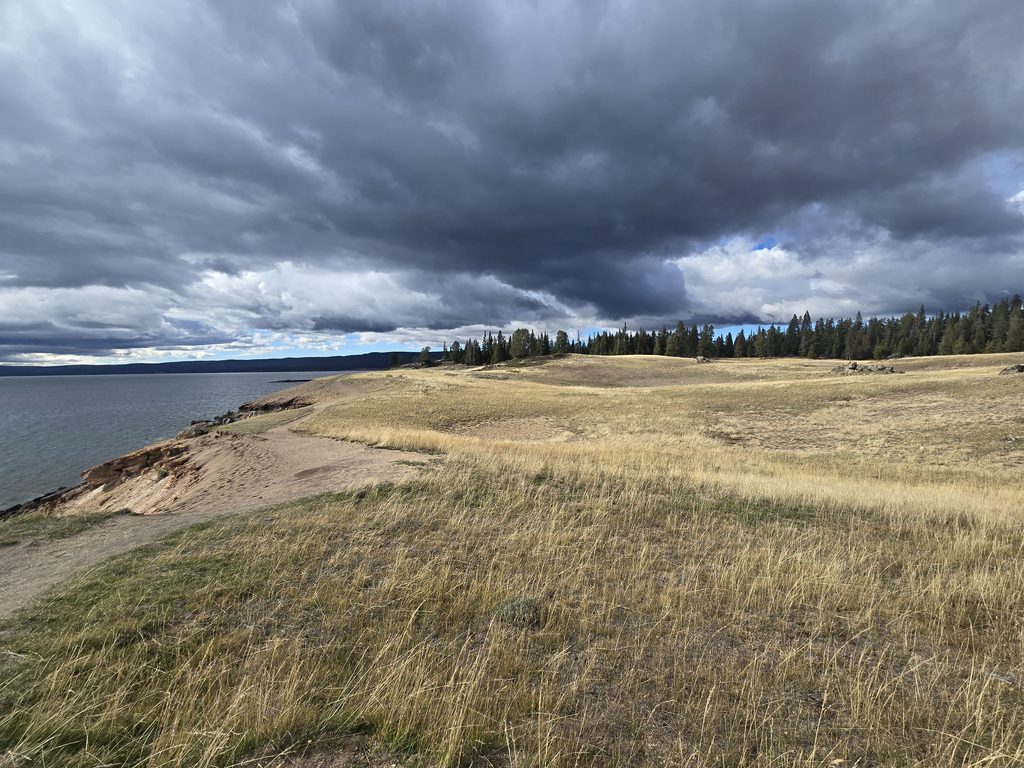
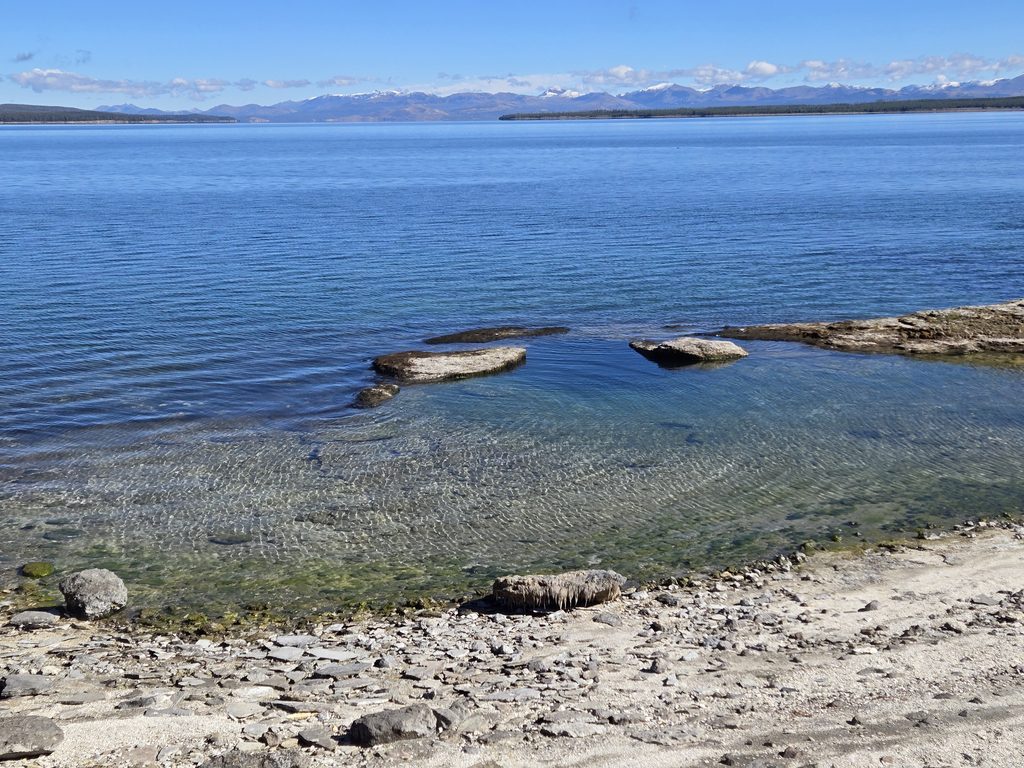
One late afternoon near the unimaginatively named Fishing Bridge, I hiked to Storm Point on Yellowstone Lake, a dramatic view reached by walking through a small plain and a bit of forest before revealing low-hanging bluffs beside the lake. It was a nice walk albeit somewhat disconcerting as I was uncertain if there were bears in the area, leading to aching hands caused by nonstop clapping. On my return, I came uncomfortably close to a bison crossing the path on its way to a drink at a small pond though we maintained eye contact along the way for a connection that transcended species. At least I thought so. What the bison thought is unknown. I did however skip the hike I had originally planned at Mount Washburn as the trailhead said grizzly bear activity was heightened in October so hiking was not recommended. I saw the parking lot was sparsely populated, indicating a paucity of potential cannon fodder for roaming bears. The can of bear spray I carried did not give me the fortitude to enter a potential episode of Man vs. Wild.
Besides the hikes, I spent quite a bit of time at the Grand Canyon of the Yellowstone. The canyon, nowhere near as grand as the actual Grand Canyon and not as steep and dark as the Black Canyon, nevertheless provides a series of dramatic views of its two falls and the course of the river. It is from this canyon that Yellowstone gets its name as the rock is painted in shades of yellow, red, orange, and pink by hydrothermal activity and oxidation. Most of that morning was blanketed in a dense fog that lowered the ceiling of the sky, creating a dramatic landscape for the bare eyes but resulting in pictures that look like a child decided to draw a bunch of clouds across the top. I did enjoy several viewpoints on my own as I had risen early that morning for wildlife watching at Hayden Valley (mostly striking out except for a coyote loping along the road and a buck elk making a crossing). Nature is sometimes best experienced in solitude and somehow in a park as busy as Yellowstone, even late in the season, I did find those precious moments.
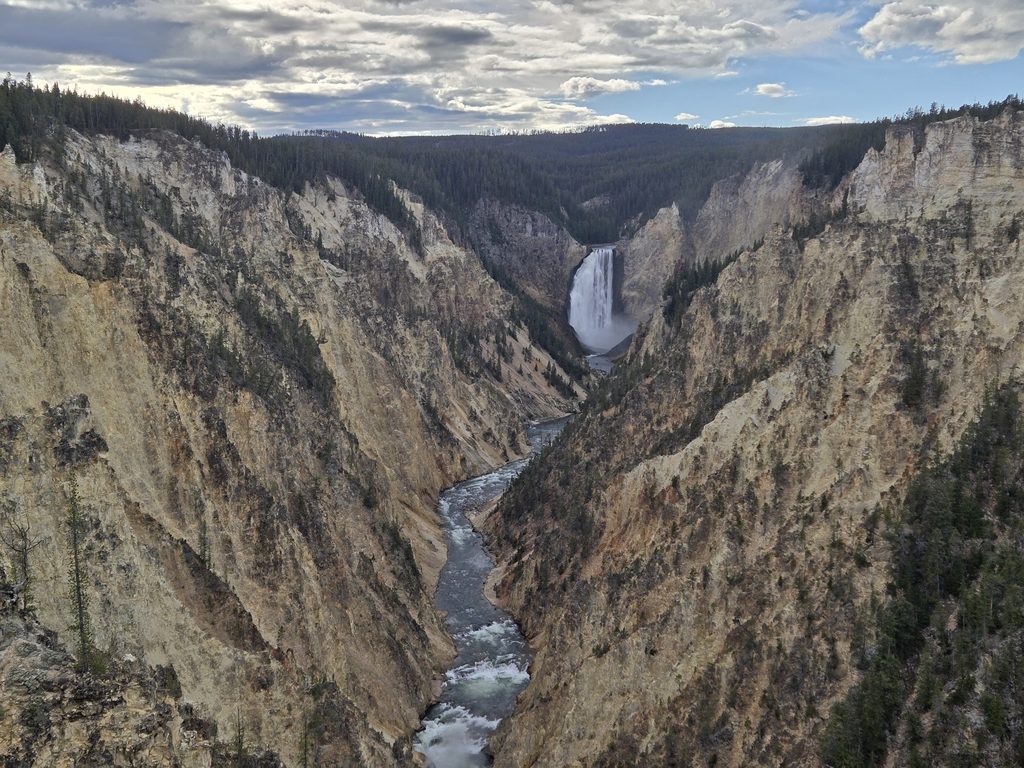
I hiked down to the Yellowstone River near Tower Falls (unimpressive despite its name but as a reminder I am a waterfall curmudgeon) and found myself sitting alone along its banks for quite some time, contemplating its beguilingly lazy drift at that particular bend, enjoying the sharp and sweet birdsong against the faint roar of the falls in the background, and washing away sweat and grime with its frigid waters. These brief moments are special moments with a heightened connection to the physical and dare I say spiritual aspects of our world.
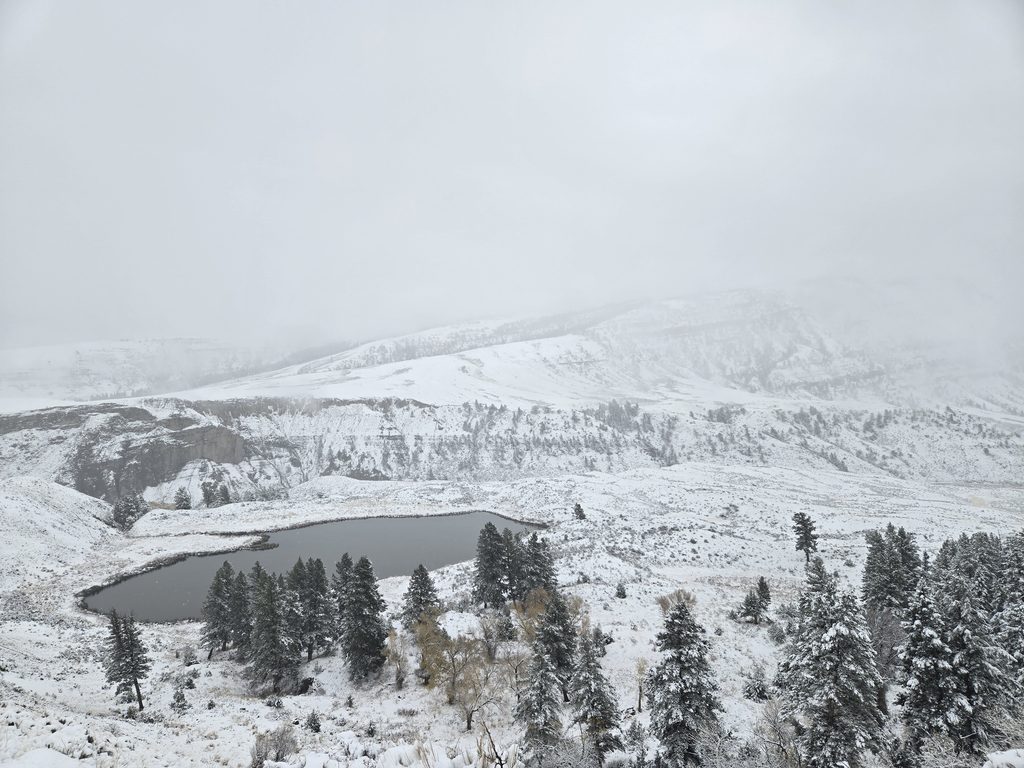
I left Yellowstone in the early afternoon after a full visit that started with blinding snow flurries and ended in a cloudless and brilliantly beautiful fall day. My final drive as I exited in the south traversed the continental divide a few times, a reminder of the geological diversity and richness of the park. While there is no snorkeling the divide as there is in Iceland, it is still astonishing that with everything else going on in the park, it is also in the path of the Great Divide, which reaches from the Bering Strait to Patagonia. What is not astonishing is the enduring popularity of Yellowstone.
As the year makes its way into late October and the deepest parts of autumn, my nature-driven travels are likely coming to an end. As I write this post, I am enjoying the view right outside of my window as the trees are changing color and occasionally dancing and prancing as a fall breeze rustles through their branches. It is a reminder that there is beauty and nature everywhere – not just in the immense landscapes and big skies of the West. Granted, no one is planning a trip to my bit of Reston to gaze at the trees of the small woods behind my house but it is nevertheless a comfort and a joy to know that moments of connection with nature are nearby for many of us.